


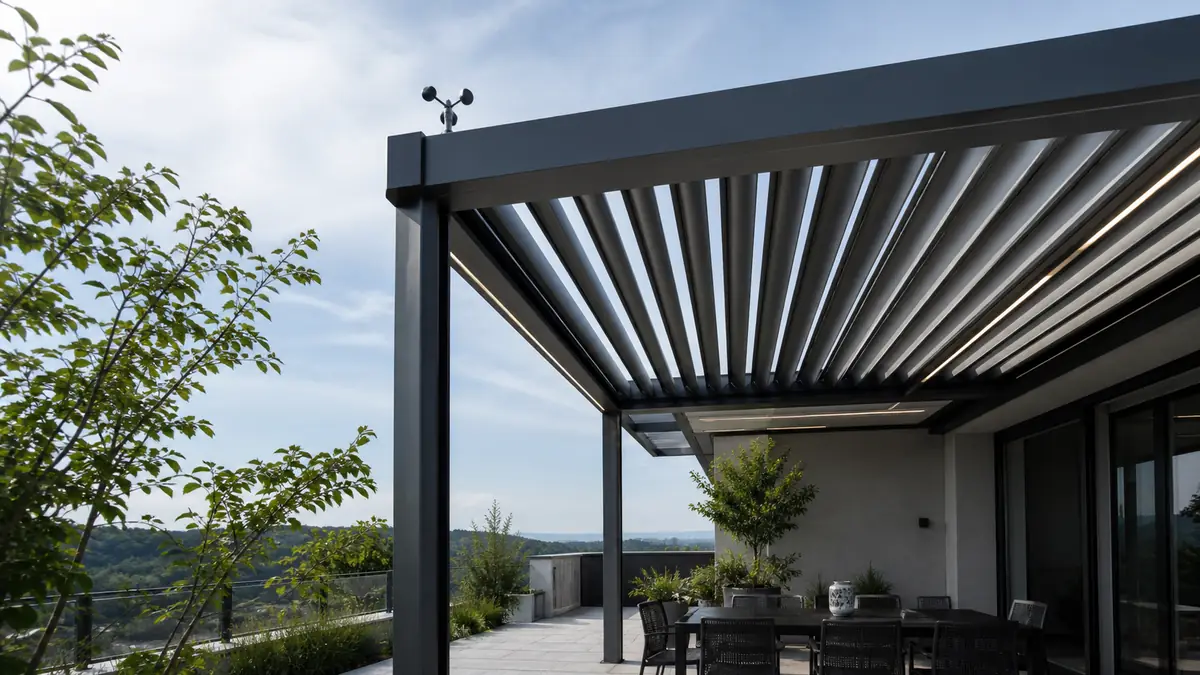
A wind threshold that is too high can leave a pergola exposed when the structure, motor, or louvers need protection. A threshold that is too low can turn a premium outdoor room into a restless machine that moves on mild, harmless gusts. For pergola manufacturers, the right question is not “what wind speed should we set?” It is “what control behavior protects the product without training the user to distrust automation?”
Die wichtigsten Erkenntnisse
- Wind thresholds should be model-specific, not copied from another pergola or awning system.
- Use wind speed, gust logic, delay timing, reset behavior, and installer guidance as one control policy.
- The best setting protects the weakest risk point while avoiding nuisance movement in normal outdoor use.
- OEMs should validate thresholds with their frame, louver, motor, control unit, and sensor placement.
Why Are Wind Thresholds a Control-System Decision?
Wind sensors are often sold as accessories, but threshold behavior belongs inside the control architecture. A sensor only reports a condition. The controller decides whether to close, open, tilt, stop, lock out, or wait. That decision affects safety, comfort, warranty cost, and brand trust.
In the pergola market, wind automation has become part of the premium expectation. Suppliers such as Renson present sensors as part of automated pergola behavior, and motor-control brands such as Somfy offer dedicated wind sensor products for shading systems. That tells us something important: the market already understands the need for wind response. What is less often discussed is how an OEM should choose the response.
A pergola does not behave like a loose awning fabric, a roller blind, or a simple roof hatch. A louvered roof has mass, moving linkages, water channels, LED wiring paths, and sometimes side screens or heaters. A retractable system may also have different safe positions depending on fabric tension, track design, and motor torque. So the threshold should be specified together with the mechanical design and the controller logic.
At VLEDSTAR, this is why we treat wind, rain, sun, snow, lighting, RF remote, Tuya app, touch panel, linear actuator, and tubular motor behavior as parts of one platform. A Steuerungssystem für Pergolen is not just a box that receives inputs. It is the rulebook for how the pergola protects itself while still feeling calm to the user.
What Should Pergola Manufacturers Protect First?
The first protected asset is not always the most visible one. End users notice moving louvers and lights, but OEMs must protect the frame, drive train, control electronics, mounting points, water-management details, and the reputation of the dealer who installed the system.
A good wind policy starts with a risk hierarchy. Structural risk comes first. If wind load can twist the frame, lift panels, overload brackets, or stress anchors, the controller must prioritize a protective position. Next comes drive-system risk. Motors, actuators, linkages, and control relays should not be asked to fight wind loads beyond their validated operating window.
Then comes water and accessory risk. Integrated LED strips, spotlights, drivers, screens, fans, and heaters can all be affected by repeated forced movement or water entering the wrong channel. A high-end pergola is no longer a bare aluminum structure. It is an outdoor electrical system with mechanical motion. The threshold has to respect that whole assembly.
Finally, there is user trust. If the pergola moves too often, the user may disable automation or stop using the sensor. That defeats the protection strategy. Comfort is not a soft issue here. It is part of safety because users only benefit from automation they leave enabled.
For OEMs building private-label systems, this is also a specification problem. The threshold cannot live only in installer habit. It should be written into the product brief, tested on the actual pergola model, and explained in the dealer documentation. VLEDSTAR’s OEM pergola control platform is designed around that type of integration work, where lighting, sensors, and movement logic are developed as one product experience.
How Do Wind Speed, Gusts, Direction, and Sensor Position Change the Result?
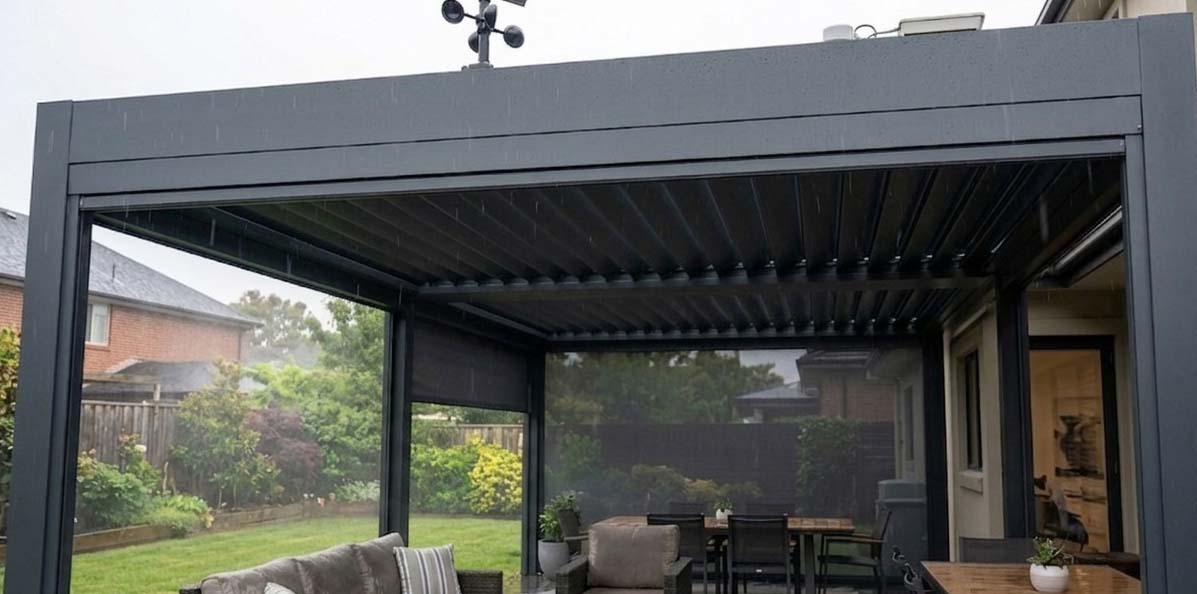
Wind speed alone is a weak decision signal because pergolas experience wind as pressure, turbulence, vibration, uplift, and gusts. The NOAA/National Weather Service Beaufort Wind Scale is useful for understanding wind language, but it should not be treated as a direct pergola threshold table.
For example, a steady breeze across an open garden can feel manageable, while short gusts between buildings may shake louvers and trigger vibration. A sensor mounted in a sheltered location may under-read the exposure at roof height. A sensor mounted near a wall edge may over-read turbulence that the pergola structure does not truly experience.
Wind direction matters as well. Some pergola roofs tolerate one direction better than another because of louver geometry, wall attachment, drainage orientation, or side screen position. An installation near the sea, on a rooftop, or between tall buildings can produce far more turbulent air than a suburban patio.
This is where many threshold discussions become too simple. A single number looks clean in a manual, but real systems need context. OEMs should define at least four things:
- The measured wind speed or gust condition that triggers protection.
- The time delay before action, so short spikes do not cause constant movement.
- The protective position, such as closed, opened, tilted, or locked.
- The reset rule, including when normal remote or app control becomes available again.
These details are covered more fully in our guide to integrating rain, wind, and sun sensors with pergola louvers. The short version is simple: sensor placement and controller logic should be tested together. If they are specified separately, the installer becomes the engineer at the job site. That is rarely the best place to make a repeatable OEM decision.
Why Do Nuisance Triggers Become a Warranty Problem?
Nuisance triggers are not just annoying. They create service calls, dealer frustration, and user behavior that can weaken the safety design. If a pergola moves every time a light breeze passes the patio, users may ask the installer to raise the threshold beyond the validated range.
The first symptom is noise. Motors engage. Louvers move. Relays click. In hospitality spaces, repeated automation can interrupt guests and staff. In residential projects, it can wake people at night or make the pergola feel unreliable during dinner. Even when nothing is technically broken, the owner sees the system as nervous.
The second symptom is conflict between manual and automatic control. A user may open the app, press a remote, or touch a wall panel, only to see the pergola override the command. If the interface does not explain the wind lockout clearly, the user assumes the controller failed.
The third symptom is unnecessary wear. A few protective movements during real wind events are expected. Dozens of small movements caused by poor delay timing, bad sensor placement, or an overly conservative threshold are different. Over time, unnecessary cycling can affect perceived quality and increase service questions.
This is why VLEDSTAR focuses on combined control behavior rather than isolated modules. A smart pergola control system should coordinate RF remote commands, Tuya app commands, touch controls, lighting scenes, sensor inputs, and motor logic. When wind protection is active, the system should behave predictably enough that the user understands it without reading a technical manual.
What Threshold Strategy Works for Different Pergola Projects?
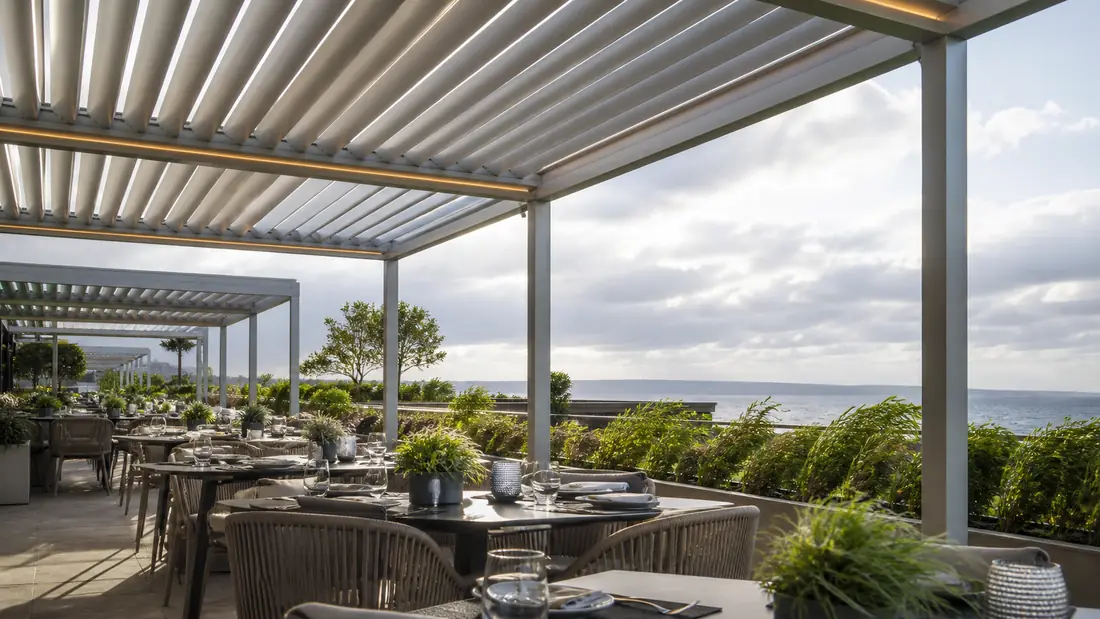
There is no universal wind threshold for all pergolas. A better approach is to create project categories, define conservative defaults for each category, and require validation against the pergola model, installation method, motor system, and local design requirements.
The following table is a practical specification framework. It is not a replacement for engineering validation, wind-load calculation, or local building requirements. It gives OEM teams a clearer way to discuss settings with product managers, electrical engineers, dealers, and installers.
| Project condition | Typical control priority | Threshold strategy | Comfort and service notes |
|---|---|---|---|
| Protected residential patio | Balance comfort with normal protection | Use a validated default with moderate delay logic to filter brief gusts. | Keep movement calm. Explain wind lockout in the remote, app, or installer handover. |
| Open garden or large freestanding pergola | Protect frame, louvers, and drive system | Use a more conservative threshold and confirm the protective louver position by model. | Dealer commissioning matters because exposure varies across the site. |
| Restaurant, hotel, or hospitality terrace | Reduce interruption while protecting commercial assets | Use tested delays, clear reset rules, and a manual override policy that never defeats safety. | Repeated false movement is highly visible to guests and staff. |
| Coastal, rooftop, or high-exposure installation | Safety first | Use conservative settings, stronger documentation, and site-specific validation. | Do not let comfort preferences push settings outside the validated safe range. |
The best OEM programs do not ship a single vague instruction such as “adjust wind sensitivity if needed.” They define a factory default, a dealer adjustment range, a protective action, and a reset behavior. They also decide what cannot be adjusted in the field.
That last point is important. Some parameters should remain manufacturer-controlled because they protect the product. Others can be installer-adjustable because each site has a different wind environment. The art is knowing which is which.
How Should OEMs Specify Wind Sensors in a Pergola Control Platform?
OEMs should specify wind sensors as part of the whole electrical and motion-control package. The specification should cover sensor type, input signal, mounting guidance, controller response, motor behavior, user interface messaging, and after-sales diagnostics.
Start with the mechanical requirement. What position is safest for this pergola model under wind? Some systems need louvers closed to reduce rain entry. Others may need a different open or tilted position to reduce uplift. The answer depends on geometry and should come from product testing, not assumption.
Next, define the sensor signal. Does the controller read a simple dry-contact signal, pulse output, RF signal, or another communication format? Does the wind event come from a dedicated sensor or a combined weather sensor? How does the controller treat signal loss? These choices affect reliability and dealer troubleshooting.
Then define priority. Wind protection normally needs to outrank lighting scenes, app schedules, voice control, wall switches, and decorative comfort features. If the user presses open during a wind lockout, the system should not behave as if the command was ignored. It should have a clear state.
Finally, document the handover. Dealers should know where to mount the sensor, how to test it, what the expected pergola movement is, and when to contact the OEM instead of changing settings. This is the difference between a product and a collection of parts.
VLEDSTAR’s pergola control systems guide explains how louvers, lighting, sensors, motors, and interfaces fit together. The same logic applies to wind thresholds: the control unit should make the pergola feel intentional, not reactive.
What Should Installers Check During Commissioning?
Commissioning is where a good threshold strategy becomes a reliable customer experience. Even a well-designed controller can disappoint if the sensor is mounted in the wrong place, the motor direction is reversed, or the reset behavior is never tested.
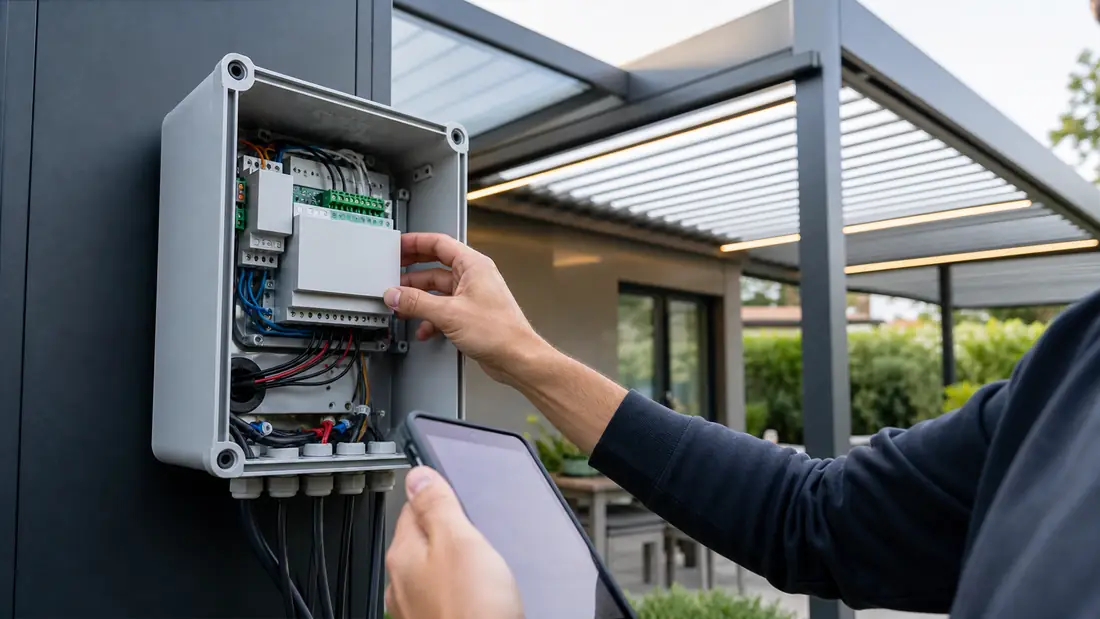
For pergola manufacturers selling through dealers, the commissioning checklist should be short enough to use on site and specific enough to prevent guesswork. A practical checklist should include:
- Confirm the pergola model, motor type, actuator stroke, and protective position.
- Mount the wind sensor where it can read real exposure without unnecessary turbulence.
- Test the controller response before handing the project to the customer.
- Verify that RF remote, app, touch panel, and wall controls respect the wind lockout.
- Check that lighting remains safe and predictable during automated movement.
- Record the final threshold setting and any site-specific notes.
- Explain the behavior to the owner in plain language.
This same discipline applies to rain automation. Our article on pergola rain sensor automation discusses why sensor response should be reliable enough that users keep it enabled. Wind protection needs the same trust.
For OEMs, the bigger lesson is that commissioning should not depend on the personality of the installer. The controller, wiring layout, sensor instruction, and support documentation should guide the installer toward the correct behavior every time.
Frequently Asked Questions
What is the best wind sensor threshold for a pergola?
There is no single best threshold for every pergola. The correct setting depends on frame design, louver geometry, motor capacity, anchoring, installation exposure, and the protective position validated by the manufacturer. OEMs should define a tested default and a controlled installer adjustment range.
Should a pergola close automatically when wind is detected?
Not always. Some pergola designs may protect themselves by closing, while others may need to open or move to a specific angle. The safe action should be validated by the pergola manufacturer. The controller should then make that action automatic, repeatable, and clear to the user.
How can manufacturers reduce false wind-sensor triggers?
False triggers can be reduced through better sensor placement, delay timing, gust filtering, reset logic, and clear commissioning rules. Raising the threshold is not always the right fix. If the sensor reads turbulence rather than true exposure, the installation may need correction.
Should users be allowed to change wind thresholds?
End users should not be allowed to change safety-critical limits beyond the manufacturer’s validated range. Dealers may need controlled adjustment access for site conditions, but OEMs should decide which parameters are locked and which can be tuned during commissioning.
Can wind, rain, lighting, and louver control share one controller?
Yes, and for OEM pergola programs it is often the cleaner approach. One controller can coordinate lighting, motors, actuators, RF remote, app control, touch panels, and weather sensors. That reduces interface conflict and gives the manufacturer a more consistent product experience.
The Strongest Wind Threshold Is a Policy, Not a Number
Wind protection is most effective when it is designed as a policy: sensor input, validated threshold, delay timing, protective movement, lockout behavior, reset condition, and installer documentation. The number matters, but it only works when the rest of the system supports it.
For pergola manufacturers in Europe and North America, this is a chance to move beyond accessory thinking. A premium pergola should not depend on separate devices that argue with each other. It should behave as one coordinated outdoor system.
VLEDSTAR develops and manufactures pergola lighting and control systems for OEM and project partners, including LED lighting, RF remote control, Tuya app control, touch panels, linear actuator control, tubular motor control, and weather sensor integration. If you are building a pergola product line and want wind, rain, lighting, and motion control to feel like one engineered platform, visit PergolaLights.net or review our integrated pergola lighting and louver control guide.

Pingback: Snow and Frost Protection Logic for Motorized Louvered Pergolas
Pingback: Snow & Frost Protection Logic for Motorized Pergolas
Pingback: Ansteuerung von Stellantrieben und Rohrmotoren für Pergola-Lamellen: Leitfaden zur OEM-Integration
Pingback: Linear Actuator vs Tubular Motor for Louvered Pergolas: Control Implications
Pingback: What Is a Smart Pergola Control System? A Manufacturer’s Explanation
Pingback: Scene Control for Pergolas: Dinner Mode, Storm Mode, Sunset Mode, and Dealer Presets
Pingback: Pergola Scene Control for OEMs: Dinner & Storm Presets
Pingback: IP65, IP66, or IP67 for Pergola Controllers and Sensors What Really Matters
Pingback: IP65 vs IP66 vs IP67 for Pergola Controllers
Pingback: Manual Override and Fail-Safe Design for Motorized Pergola Controls
Pingback: How to Evaluate Pergola Control System Suppliers 15 Questions for OEM Buyers
Pingback: Separate Modules vs Integrated Pergola Controller: Cost, Wiring, and Support Comparison