


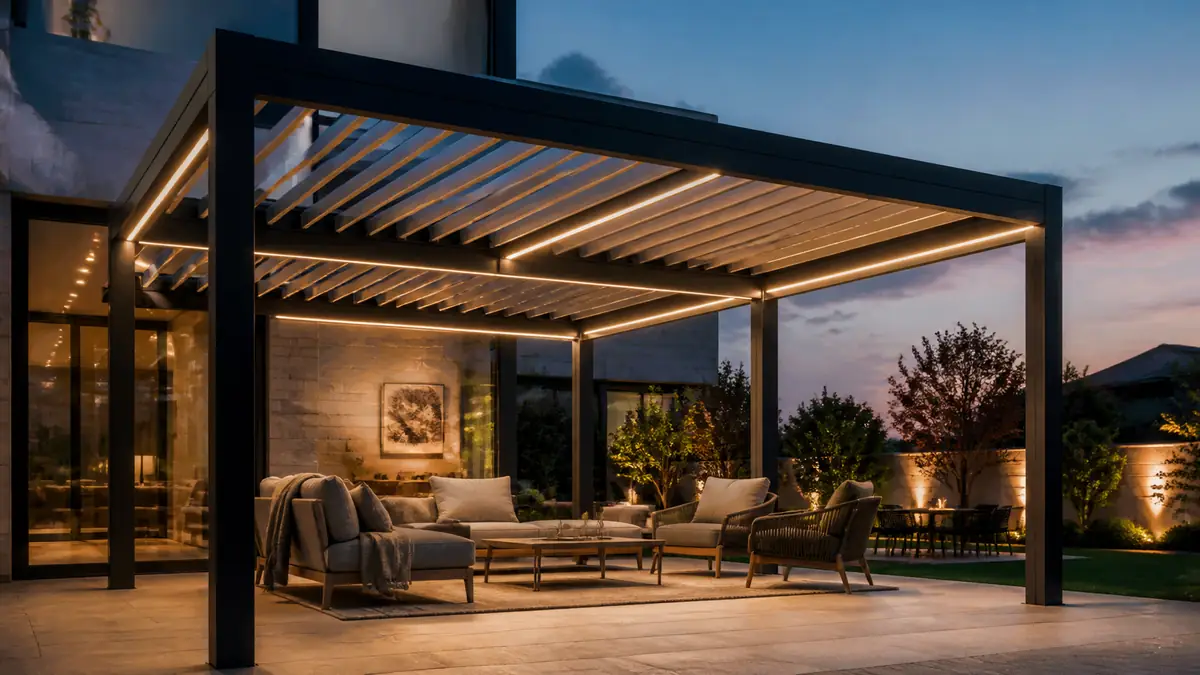
Die wichtigsten Erkenntnisse
- A smart pergola control system should coordinate motion, lighting, sensors, and user interfaces as one product platform.
- For OEMs, reliable RF behavior, outdoor protection, wiring simplicity, and repeatable dealer setup matter more than a long app feature list.
- The strongest systems keep local control working even when WiFi, cloud services, or voice assistants are unavailable.
- Manufacturers should specify control architecture early, before aluminum profiles, lighting channels, motor choice, and packaging are locked.
A homeowner may describe a smart pergola as “a pergola I can control from my phone.” That is understandable, but it is incomplete. A manufacturer has to think deeper because the control system affects the electrical layout, installation time, service calls, dealer confidence, and the way the final product is positioned in Europe and North America.
In practice, a Steuerungssystem für Pergolen becomes the bridge between mechanical structure and user experience. If that bridge is weak, the pergola may still open, close, and light up during a showroom demo. The problems appear later: confusing remotes, unstable pairing, poor RF range through aluminum, sensor behavior that annoys users, or lighting zones that cannot match premium project requirements.
This article explains smart pergola control from a manufacturer’s point of view. The position is simple: smart control should not be treated as an accessory. It should be engineered as a core part of the pergola product line.
What Does a Smart Pergola Control System Actually Control?
A smart pergola control system controls the physical functions that shape outdoor comfort: louvers, retractable roofs, LED lights, screens, heaters, fans, and weather sensors. The word “smart” should mean coordinated behavior, not just app access.
The basic system usually includes a controller, power supply or driver interface, receiver module, transmitters, sensor inputs, motor outputs, lighting outputs, wiring accessories, and pairing logic. In higher-end projects, the same platform may also support multi-zone lighting, RGBW scenes, tunable white lighting, rain automation, wind protection, remote diagnostics, and integration with home automation ecosystems.
Motion control
Motion control is the first layer. A louvered pergola may use linear actuators, tubular motors, or other drive methods depending on structure design. The controller must match the motor voltage, current, travel behavior, limit logic, and safety requirements. For manufacturers comparing drive types, VLEDSTAR’s actuator and tubular motor control guide is a useful technical reference.
Good motion control feels simple to the user. Behind that simplicity, the system has to handle direction control, limit positions, stop commands, grouped movement, emergency responses, and commissioning. If installers have to improvise these details project by project, the product is not truly standardized.
Lighting control
Lighting control is where many pergola brands can create visible product difference. Integrated LED strip lights, downlights, spotlights, wall lights, and indirect profile lighting all need different control decisions. A single-color ambient kit is not controlled the same way as an RGBW entertainment package.
A manufacturer should decide how many lighting channels are needed, whether dimming must be smooth, whether color temperature is fixed or adjustable, and whether scenes should combine louver movement with lighting behavior. VLEDSTAR’s Beleuchtungslösungen für Pergolen page shows how lighting options can be planned as a product system rather than loose accessories.
Sensor response
Sensors are not decoration. Rain, wind, sun, snow, and frost inputs can change how the pergola behaves without user action. This is where control logic becomes a real engineering topic.
For example, a rain sensor may close louvers to protect furniture, but the same response may not fit every product design, climate, or hospitality project. A wind sensor may need priority over comfort commands. Sun input may support shading scenes, but it should not create constant nuisance movement. For deeper planning, see VLEDSTAR’s rain, wind, and sun sensor integration guide.
Why Is Smart Control Different for Manufacturers Than for Homeowners?
Homeowners judge smart control by convenience. Manufacturers are judged by repeatability. A system that works in one demo unit but causes confusion across dozens of dealers, climates, wiring layouts, and aluminum structures will quietly damage margin.
That difference changes the buying criteria. A homeowner may ask, “Can I use an app?” A manufacturer should ask, “Can our factory pre-wire it, can our dealer pair it quickly, can the user recover from mistakes, and can our service team explain it in two minutes?”
A strong OEM control platform helps the pergola brand in five ways:
- It reduces the number of separate transmitters, receivers, drivers, and wiring decisions.
- It gives dealers a more consistent installation process.
- It allows lighting, motor, and sensor packages to be sold as product tiers.
- It reduces the chance of field failures caused by mismatched components.
- It gives the brand a clearer technical story when competing for premium projects.
The control system also shapes after-sales cost. A confusing setup can become a warranty issue even when no component is defective. If the remote pairing sequence, sensor priority, or app onboarding is hard to explain, the manufacturer’s support team pays for that complexity later.
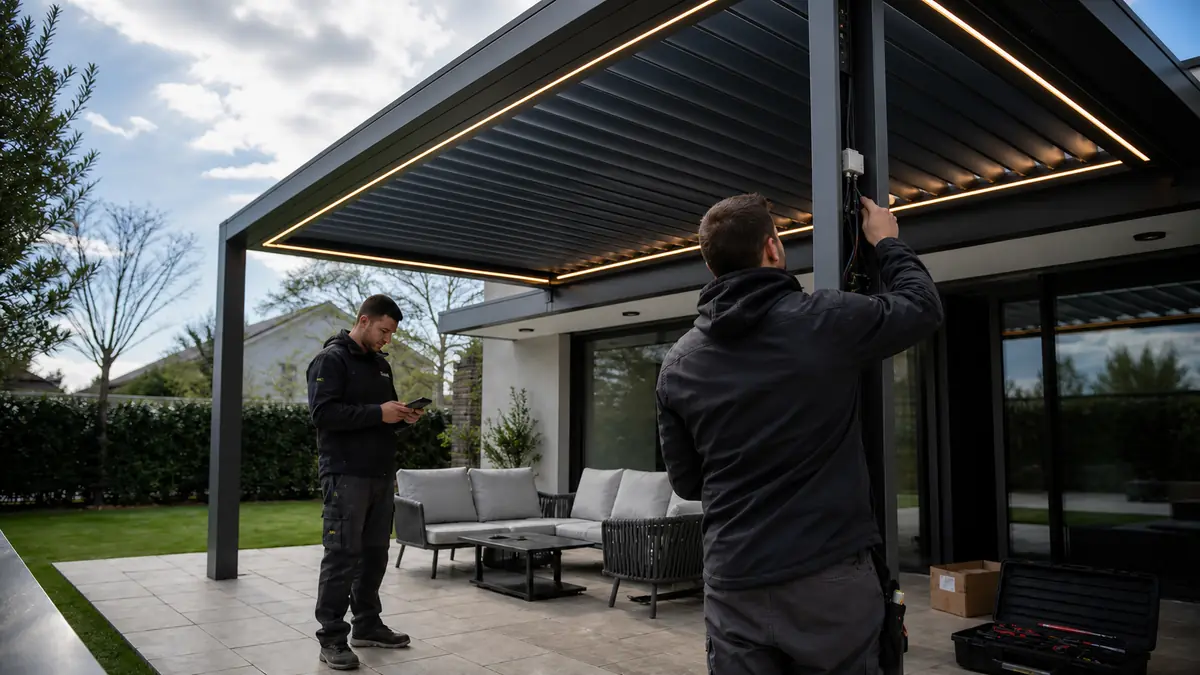
What Should the Control Architecture Include?
A smart pergola control architecture should include local control, central coordination, outdoor protection, and optional cloud or smart home integration. Local reliability should come first because pergolas operate outdoors, often far from routers and in aluminum structures that challenge wireless signals.
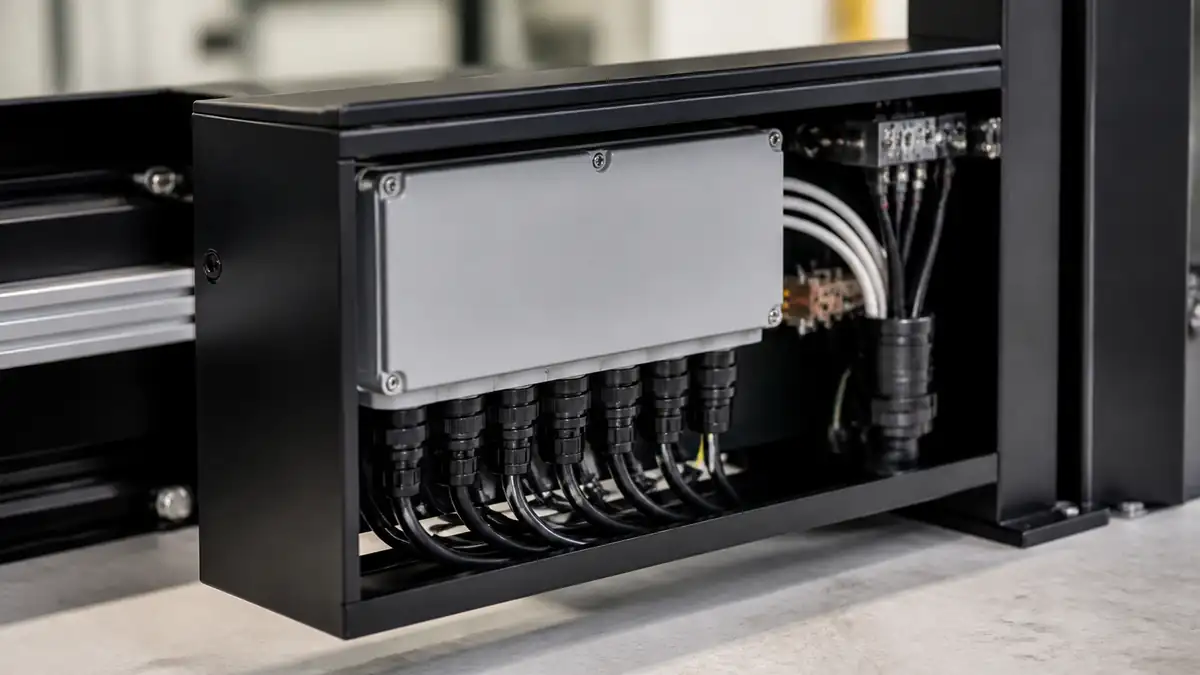
For most OEMs, the practical architecture is layered. The low-level layer handles motors, LED outputs, power, sensors, and emergency logic. The local user layer includes RF remote, wall switch, or touch panel. The connected layer adds WiFi app control, voice control, and ecosystem integration when the market requires it.
| Architecture Layer | What It Does | Manufacturer Concern |
|---|---|---|
| Power and drive layer | Supplies motors, drivers, and control outputs | Voltage, current, load margin, wiring safety, heat, service access |
| Local RF layer | Runs remotes and basic commands without internet | Range through aluminum, pairing stability, channel naming, interference behavior |
| Sensor layer | Triggers rain, wind, sun, snow, or frost logic | Priority rules, nuisance triggers, location guidance, dealer setup |
| Lighting layer | Controls mono, CCT, RGB, RGBW, or multi-zone LED packages | Driver sizing, dimming quality, waterproof connectors, voltage drop |
| Connected layer | Adds app, WiFi, scenes, timers, and voice commands | Onboarding, user accounts, data region concerns, firmware support |
Manufacturers should specify this architecture before finalizing aluminum profiles. Profile cavities, wiring channels, access covers, controller position, antenna path, and LED diffuser design all affect control performance. Retrofitting the control concept after the frame is already designed usually creates compromises.
VLEDSTAR’s Pergola-Steuergerät approach is built around that problem: one control box should coordinate the major electrical functions instead of forcing factories to combine disconnected receivers, drivers, and transmitters.
Is App Control Enough to Call a Pergola Smart?
No. App control is useful, but it is not enough. A pergola can have an app and still be poorly engineered if it loses local control, requires awkward pairing, ignores sensor priority, or cannot manage lighting and motion as one system.
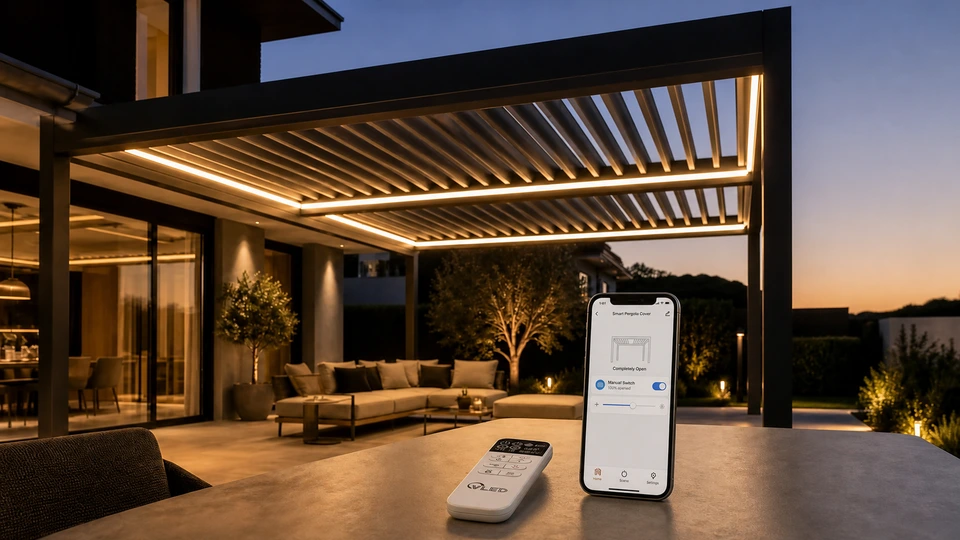
For premium outdoor products, the app should be the convenience layer, not the foundation. Users still expect the remote to work when the phone is not nearby. Hospitality staff need wall control that guests can understand. Dealers need a commissioning method that does not depend on a customer’s WiFi password during a rushed installation.
Voice control is similar. It can improve the experience, especially in residential projects where homeowners already use smart home platforms. However, it should not be the only control path. Outdoor equipment needs a fallback command route because cloud connections, routers, and voice assistants are outside the pergola manufacturer’s control.
If a brand wants broad smart home compatibility, it should watch the development of Beitrag der Connectivity Standards Alliance. Matter is designed to improve interoperability among smart home devices, but manufacturers still need to confirm which device classes, gateways, regions, and control functions fit their pergola product. A marketing checkbox is not the same as a supported control design.
Which User Interfaces Should a Manufacturer Offer?
The best interface strategy depends on the channel. Residential dealers, hospitality projects, and DIY kits do not need the same control mix. A manufacturer should choose interfaces by reliability, training burden, project value, and user behavior.
RF remote control
RF remote control remains the backbone for many pergola systems because it is fast, local, and familiar. It does not require an app account or network setup. The engineering challenge is range and stability, especially when the controller sits inside or near aluminum profiles.
Factories should test RF range in realistic assemblies, not only in open air. Aluminum posts, beams, motors, LED drivers, and cable routing can all change performance. VLEDSTAR’s article on RF signal behavior in metal pergola structures explains why this issue deserves early attention.
Wall switch or touch panel
Wall control is often underestimated. In commercial patios, restaurants, pool areas, and rental properties, a wall switch or touch panel may be more practical than a personal phone. It also gives installers a clear place to test commands during commissioning.
For OEMs, the key is consistency. Labels, channels, and scenes should match the product package. If one dealer calls a lighting zone “strip,” another calls it “ambient,” and the remote calls it “channel 3,” support becomes harder than it needs to be.
App and voice control
App control is valuable when it adds scene logic, timer control, grouped zones, remote access, and premium positioning. Voice control can support hands-free use. Both should sit on top of a stable local system.
Manufacturers comparing interface options can use VLEDSTAR’s RF remote, app, voice, and wall switch guide to separate customer-facing features from factory and dealer requirements.
How Should Weather Sensors Be Prioritized?
Weather sensors should follow a clear priority order. Safety and product protection must override comfort scenes. If sensor logic is vague, the pergola may behave unpredictably in rain, wind, frost, or mixed conditions.
A practical control strategy starts by defining what each sensor is allowed to do. Rain may close louvers. Wind may open or close them depending on the structure and manufacturer’s engineering decision. Sun may adjust shade position. Snow or frost logic may limit movement to protect mechanical parts.
Manufacturers should also decide how users can override sensor behavior. A system that never allows override may frustrate users. A system that allows unsafe override may create risk. The better answer is a documented priority ladder with clear behavior for each product line.
Manufacturer’s note: sensor placement is as important as sensor type. A rain sensor hidden under a beam or a wind sensor shielded by a wall may send the controller the wrong information. Installation manuals should define placement zones, cable routing, and test steps.
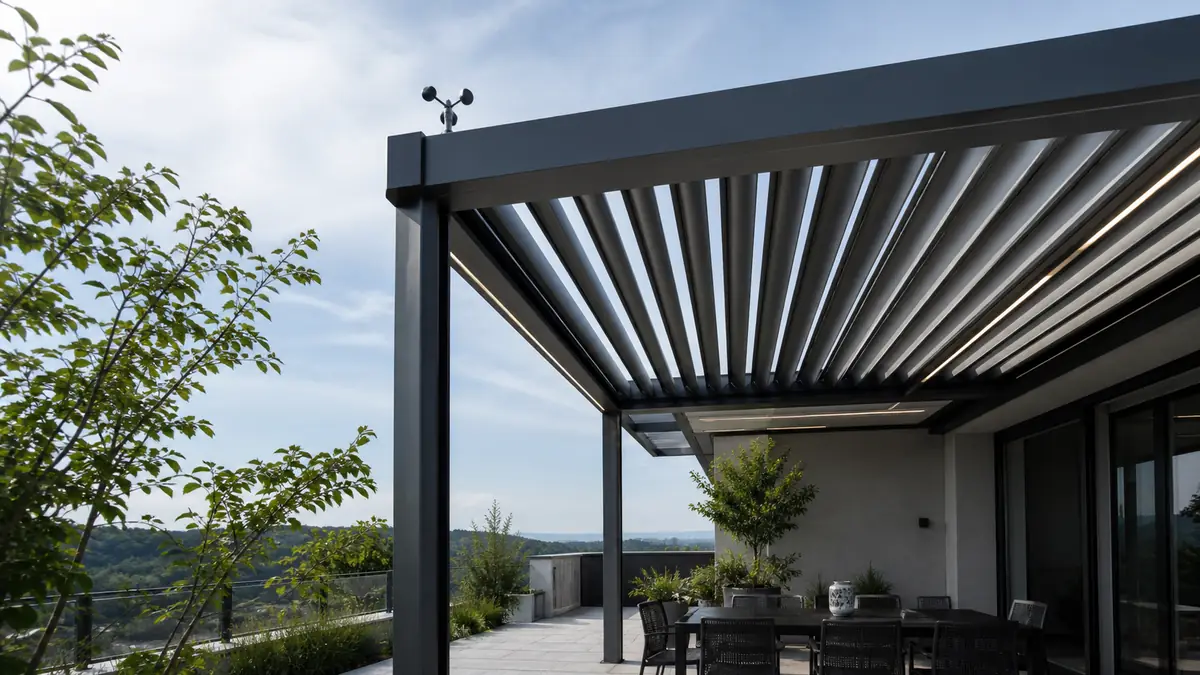
For rain planning, VLEDSTAR’s rain sensor placement guide gives factory and installer guidelines. For wind behavior, the wind sensor threshold guide explains why comfort, noise, and safety must be balanced.
What Makes Outdoor Control Systems Fail?
Outdoor control systems fail when they are designed like indoor electronics. Moisture, condensation, temperature swing, UV exposure, cable strain, RF interference, voltage drop, and service access all matter in a pergola environment.
IP ratings are often the first topic in outdoor control discussions. They are important, but they are not the whole design. The IEC explains IP ratings as a code for protection against solids and water. That code helps define enclosure protection, but it does not automatically solve condensation, connector quality, cable bending, drainage, or installation mistakes.
Manufacturers should look at failure modes as a system:
- Water ingress through poorly chosen enclosures, glands, or connectors.
- Condensation caused by temperature differences inside sealed cavities.
- RF loss caused by aluminum structures and controller placement.
- LED driver stress caused by undersized power design or poor heat paths.
- Voltage drop in long low-voltage LED runs.
- Confusing service access that forces installers to disturb finished structures.
These are not abstract problems. They affect margin. A failed controller may cost little as a component, but the site visit, replacement time, customer frustration, and dealer relationship can cost far more. That is why VLEDSTAR treats motor and lighting integration as an engineering system, not a bundle of separate accessories.
What Compliance Questions Should OEMs Ask?
Compliance depends on destination market, wireless technology, power design, and product category. Manufacturers should not rely on a supplier’s generic statement that a controller is “export ready.” They should ask which standards, reports, labels, and radio approvals apply to the exact configuration being shipped.
For the United States, wireless devices should be reviewed against the applicable 47 CFR Part 15 radio frequency rules. For the European Union, radio products should be reviewed against the Radio Equipment Directive harmonised standards. These links are starting points, not substitutes for project-level compliance review.
The same caution applies to power supplies, LED drivers, enclosure materials, plugs, cabling, and installation instructions. A control system that is technically functional can still delay launch if documentation, labeling, or regional versions are not planned early.
The safest sourcing conversation is specific. Ask the supplier what is covered by existing documentation, what changes if the motor or driver changes, what must be tested locally, and whether firmware or RF settings differ by market. That conversation should happen before tooling, packaging, and dealer manuals are finished.
Build or Buy: What Is the Better Manufacturer Strategy?
Building your own control system gives maximum ownership, but it also creates responsibility for electronics, firmware, RF, app maintenance, testing, documentation, and field support. Buying an OEM platform is often faster when the pergola brand wants stable launch quality without building a full controls team.
The decision should not be framed as “cheap supplier versus full in-house R&D.” Many successful pergola manufacturers use a middle path: source a proven control platform, then customize channels, remote logic, wiring layout, interface labeling, lighting packages, and brand presentation.
That approach works best when the supplier understands both lighting and motion control. If the lighting supplier only sells LED strips, integration gaps appear around drivers, dimming, waterproof connectors, and control channels. If the motor supplier only handles movement, the lighting experience may feel like an afterthought.
VLEDSTAR’s build vs. buy guide for pergola control systems explores this decision in more detail. The short version is practical: build when control technology is a core internal advantage and you can support it long term. Source when speed, reliability, and manufacturing focus matter more.
How Should Manufacturers Specify a Smart Pergola Control System?
A good specification starts with the pergola product line, not the controller catalog. The control system should match structure size, motor type, lighting package, dealer skill, destination market, and brand positioning.
Use these questions before asking for a quotation:
- Which pergola models will share the same control architecture?
- What motor types, voltages, loads, and limit methods must be supported?
- How many lighting zones are needed for entry, mid-range, and premium packages?
- Will lighting be mono, CCT, RGB, RGBW, or mixed by zone?
- Which sensors are required, and what is the priority order?
- Which interface is primary: RF remote, wall control, app, touch panel, or voice?
- Where will the controller, antenna, drivers, and service access be located?
- What dealer setup steps can be completed at the factory?
- Which compliance documents are required for each sales region?
- What spare parts and support materials will be available after launch?
A specification like this turns sourcing into engineering alignment. It also helps suppliers propose the right system instead of guessing from a short message such as “we need smart pergola control.”
For BOM planning, VLEDSTAR’s Checkliste für die Stückliste des Pergola-Steuerungssystems is a practical next step. It helps manufacturers think through controllers, receivers, remotes, sensors, drivers, connectors, cables, manuals, and packaging before production pressure starts.
What Should a Strong OEM Supplier Bring to the Project?
A strong OEM supplier should bring more than parts. The supplier should help the manufacturer reduce control complexity, improve installation logic, test outdoor reliability, and turn lighting and motion into a repeatable product package.
For a pergola brand, that support may include electrical architecture, sample kits, channel planning, controller matching, LED driver sizing, waterproof connection design, remote pairing logic, app configuration, packaging advice, and troubleshooting support. These tasks are not glamorous, but they decide whether the system survives real projects.
VLEDSTAR develops and manufactures pergola lighting and smart control systems for outdoor structures, with experience in LED strip kits, spotlights, motor and lighting integration, RF control, sensors, and OEM control packages. That background is valuable because the hardest control problems often sit between categories. The motor, light, sensor, and user interface must behave like one product.
Manufacturers can start with a standard platform, such as a smart pergola controller, then adapt it to their own product tiers. For example, one line may need basic louver plus mono LED control. Another may need multi-zone RGBW lighting, rain and wind sensors, wall control, app scenes, and dealer-friendly pre-pairing.
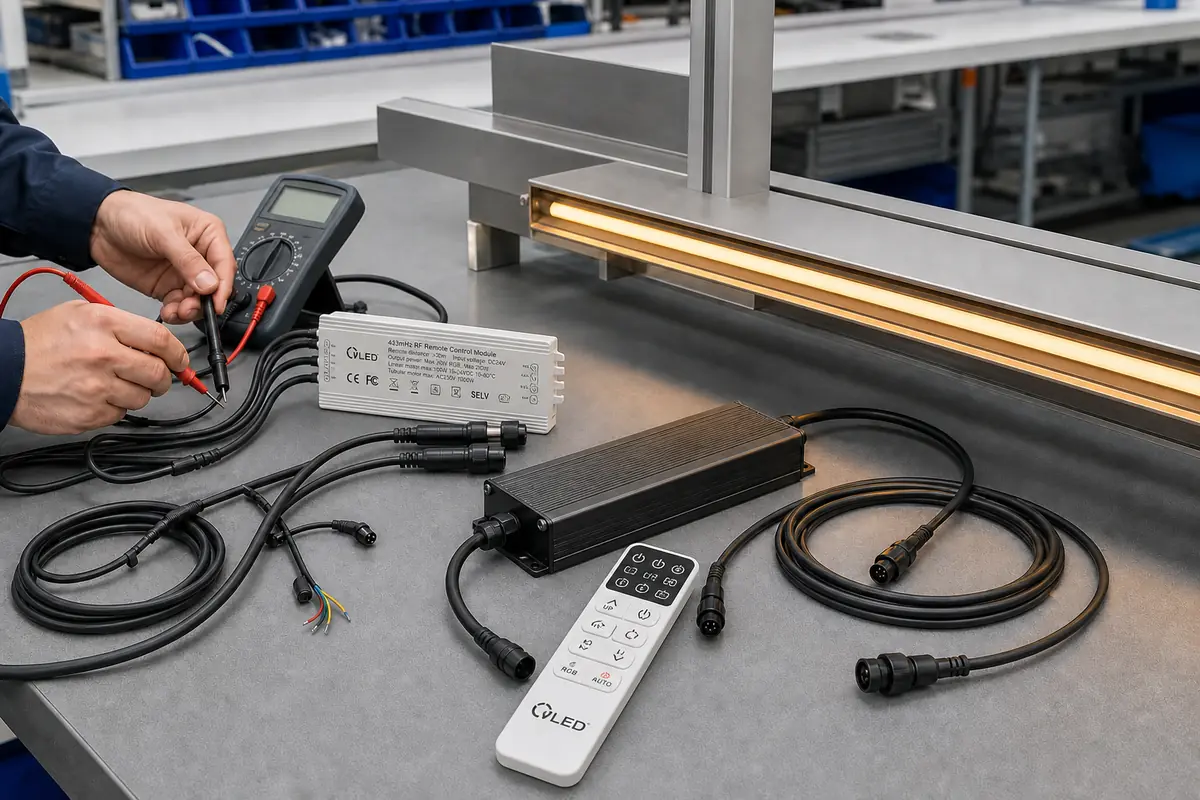
The goal is not to add every possible feature. The goal is to make the right features dependable, understandable, and profitable.
The Manufacturer’s Definition of “Smart”
A smart pergola control system is not smart because it has WiFi. It is smart when it makes the pergola easier to sell, easier to install, easier to use, and easier to support.
That definition is stricter than the consumer version, and it should be. A pergola is a physical outdoor product. It moves. It carries electrical loads. It meets rain, wind, heat, cold, installers, dealers, and end users who may never read the manual. Smart control has to respect all of that.
For manufacturers, the strongest control system is usually the one that disappears in daily use. The louvers respond correctly. The lighting feels intentional. The remote makes sense. The app adds comfort. Sensors protect the product. Dealers can explain it. Support teams can diagnose it. Production can repeat it.
That is the standard worth building toward.
Plan a Smarter Pergola Control Package
If you are developing a new louvered pergola, upgrading an existing kit, or trying to combine motors, LED lighting, sensors, RF remote, and app control into one OEM package, VLEDSTAR can help review the control architecture before production decisions become expensive.

Pingback: Manual Override and Fail-Safe Design for Motorized Pergola Controls
Pingback: Pergola Lighting Controls for Outdoor Kitchens and Dining Areas