


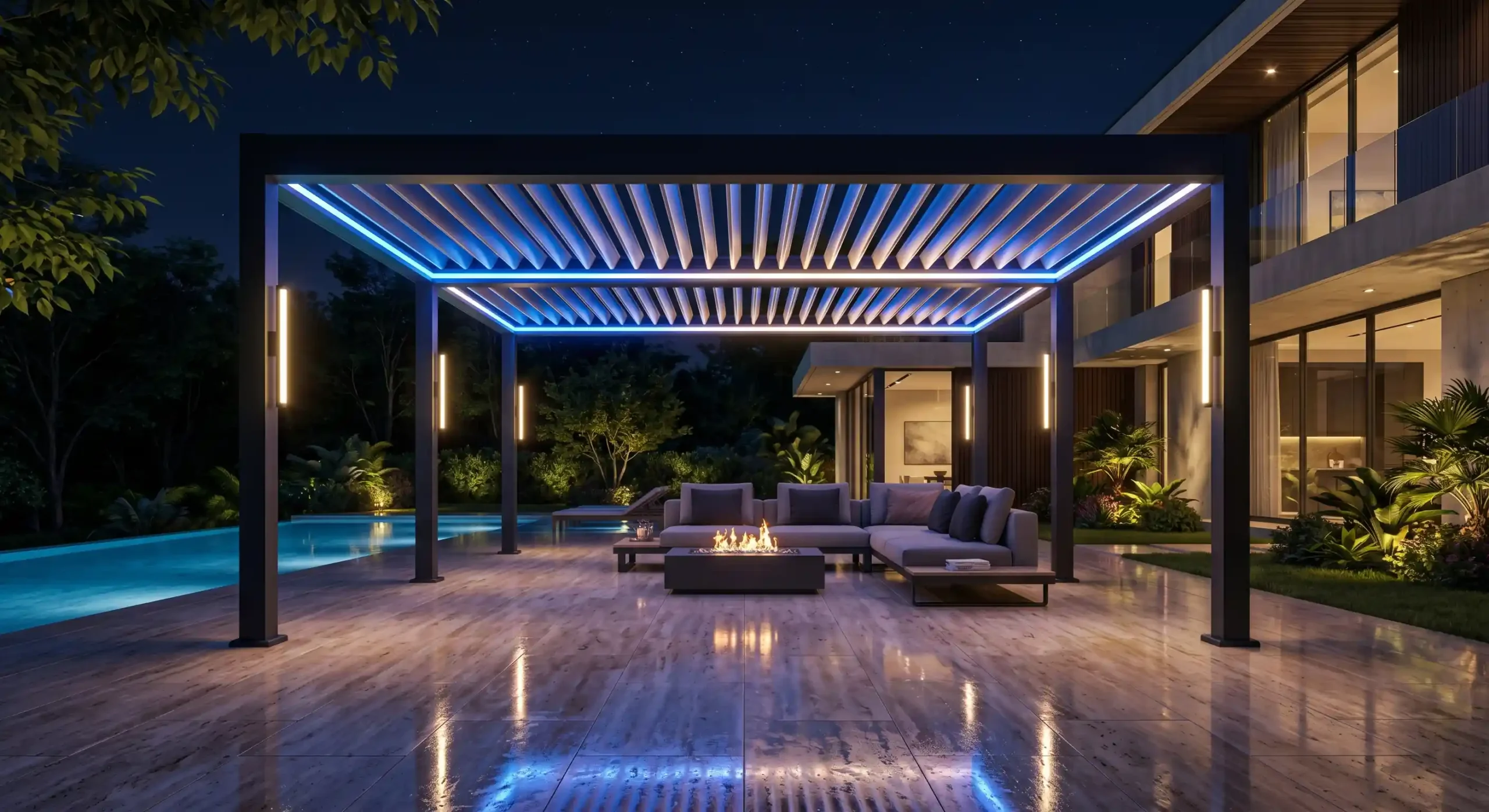
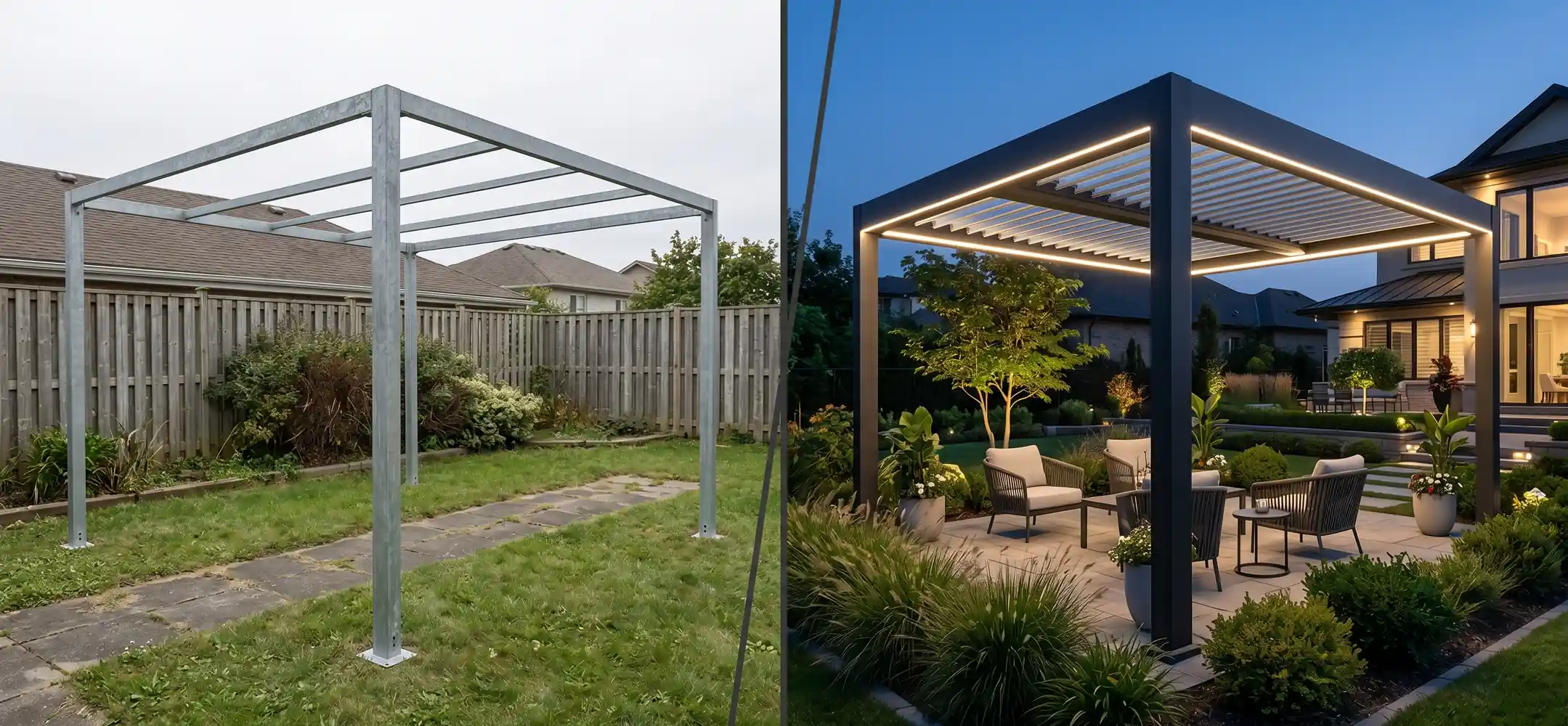
The global outdoor living market has fundamentally fractured into two distinct operational realities. On one side of the spectrum, mass-market importers and traditional fabricators are engaged in a race to the bottom, pushing baseline aluminum and wood kits that yield aggressively compressed margins. These entities operate in a commodity ecosystem where the product is valued by the pound, commanding retail prices between $2,000 and $5,000. On the opposing side, premium manufacturers and design-build firms are securing Average Selling Prices (ASP) ranging from $15,000 to over $50,000 for the exact same physical footprint. The primary differentiator driving this massive valuation gap is not the aluminum tonnage, the thickness of the extrusion, or the hardware. The delta is defined entirely by the integration of OEM-grade lighting, environmental sensors, and intelligent control systems.
Strategic pricing and product mix optimization remain the most powerful, yet frequently misunderstood, levers for enterprise profitability. Analysis of manufacturing economics demonstrates that a 1 percent price increase, assuming stable unit volumes, can generate an outsized increase in operating profits. For European and American pergola manufacturers, attempting to raise prices on standard metal extrusions is met with immediate market resistance due to extreme price transparency. However, integrated lighting and smart automation represent an entirely different value proposition. By transitioning a product from a passive shade canopy to an active, climate-adaptive smart-home extension, manufacturers can exponentially increase their ASP, protect distributor margins, and insulate their product lines from commodity-level price wars.
This comprehensive analysis explores the financial, technological, and strategic mechanisms by which integrated lighting and control systems elevate the commercial viability of modern louvered pergolas.
The Physics and Economics of Margin Expansion
To understand why lighting and automation are the ultimate margin multipliers, it is necessary to examine the unit economics of a standard louvered pergola. When a consumer or commercial buyer evaluates a traditional, manually operated pergola, the comparative metric is strictly architectural. Wood pergolas typically range from $15 to $60 per square foot, while standard imported aluminum kits range from $19 to $38 per square foot. At this level, the product is evaluated identically to lumber or basic patio pavers.
However, when a pergola includes recessed trim lighting, dynamic RGBW ambient zones, and motorized louvers synchronized with weather sensors, the buyer’s psychological anchor shifts from “building material” to “luxury lifestyle asset.” This shift allows commercial-grade, direct-to-consumer, and dealer-installed systems to command between $115 and $420 per square foot. The manufacturing cost delta between a bare aluminum frame and a pre-wired frame ready for OEM LED integration is marginal, yet the premium the final product commands is exponential.
The McKinsey Pricing Paradigm in Manufacturing
The fundamental logic for prioritizing this integration is rooted in established pricing theory. According to research from McKinsey & Company on the power of pricing, price is the most effective lever to boost profitability, far outpacing cost-cutting or volume growth. The data consistently shows that companies utilizing value-based, strategic pricing methods see materially higher profit gains than those relying on volume alone.
In the context of outdoor structures, adding a professional OEM LED lighting system — which carries a wholesale cost of approximately $599 to $899 depending on the footprint — allows dealers and manufacturers to justify system-wide retail price increases of $3,000 to $8,000. The perceived value of the illumination far exceeds the component cost.
Furthermore, this profitability multiplies as the product moves through the dealer network. A premium louvered pergola kit costing $18,500 factory-direct frequently becomes a $40,000 to $55,000 installed solution through a local dealer. The complexity and perceived luxury of the wiring, lighting, and automation justify premium installation markups. For the original manufacturer, offering a plug-and-play, proprietary lighting ecosystem means capturing more of that baseline value at the factory level while standardizing the assembly process — making the dealer highly dependent on the manufacturer’s specific technology stack.
| System Tier | Functional Profile | Average Retail Price | Margin Potential | Value Proposition |
|---|---|---|---|---|
| Commodity Kit | Manual louvers, no lighting, basic galvanized hardware | $2,000 – $5,000 | Low (volume dependent) | Pure price competition, high churn |
| Mid-Range Modular | Motorized louvers, basic LED strips, standard remote control | $6,000 – $12,000 | Medium (20% – 30%) | Accessible upgrade, functional shade |
| Premium Integrated | Zoned RGBW lighting, smart rain/wind sensors, app control | $15,000 – $28,000 | High (35% – 50%) | Smart home extension, climate adaptation |
| Dealer-Installed Custom | Fully autonomous, home-network synced, hidden architectural wiring | $35,000 – $60,000+ | Exceptional | Luxury lifestyle asset, zero friction |
Designing the Architectural Illumination Ecosystem
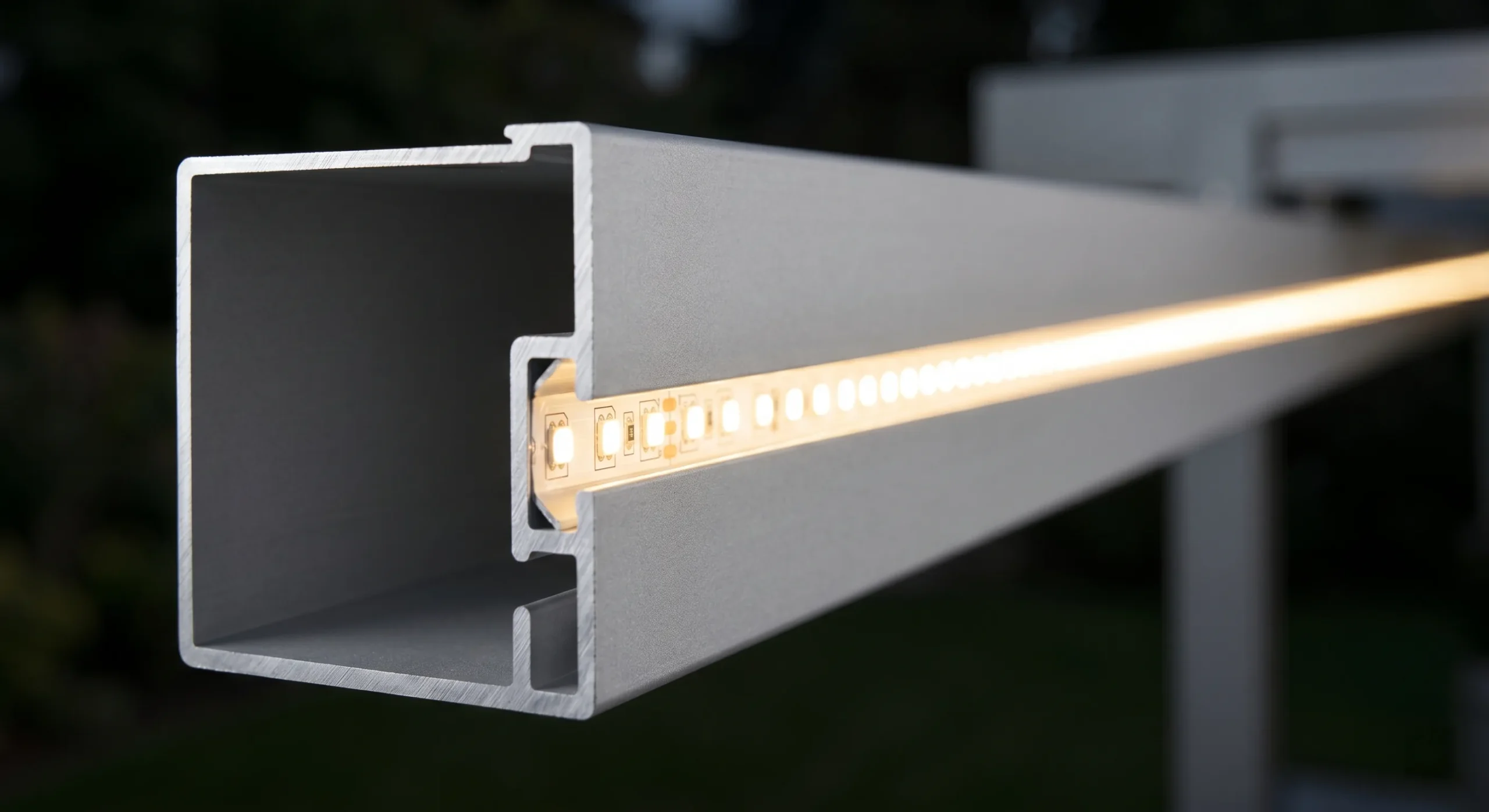
Achieving premium margins requires more than simply attaching aftermarket lightbulbs to an aluminum post. The market aggressively rejects improvised, retrofitted solutions. Permanent LED lighting, installed professionally at the factory or dealer level, must provide clean lines, robust illumination, and a polished result that feels entirely native to the structure. True architectural integration requires planning the lighting ecosystem at the extrusion level, utilizing pre-engineered mounting points, groove systems, and concealed wiring channels within the 6063-T6 aluminum posts and gutters.
A sophisticated pergola lighting strategy utilizes layered illumination to address the highly specific, multimodal requirements of the end-user.
Integrated Roofline and Perimeter Trim Lighting
Linear LED strips mounted via groove systems in the rain gutters or directly integrated into the roof slats represent the baseline expectation for any premium Series 4 or bioclimatic system. This approach provides a minimalist, visually consistent design that delivers ample, shadow-free brightness across the entire footprint. Upgrading these embedded systems to RGBW (Red, Green, Blue, Warm White) allows the end-user to dynamically shift the environment. A user can utilize highly functional 3000K task lighting for an outdoor dinner, then transition to vibrant, atmospheric colors for late-night entertainment.
Recessed Puck Lighting and Precision Downlights
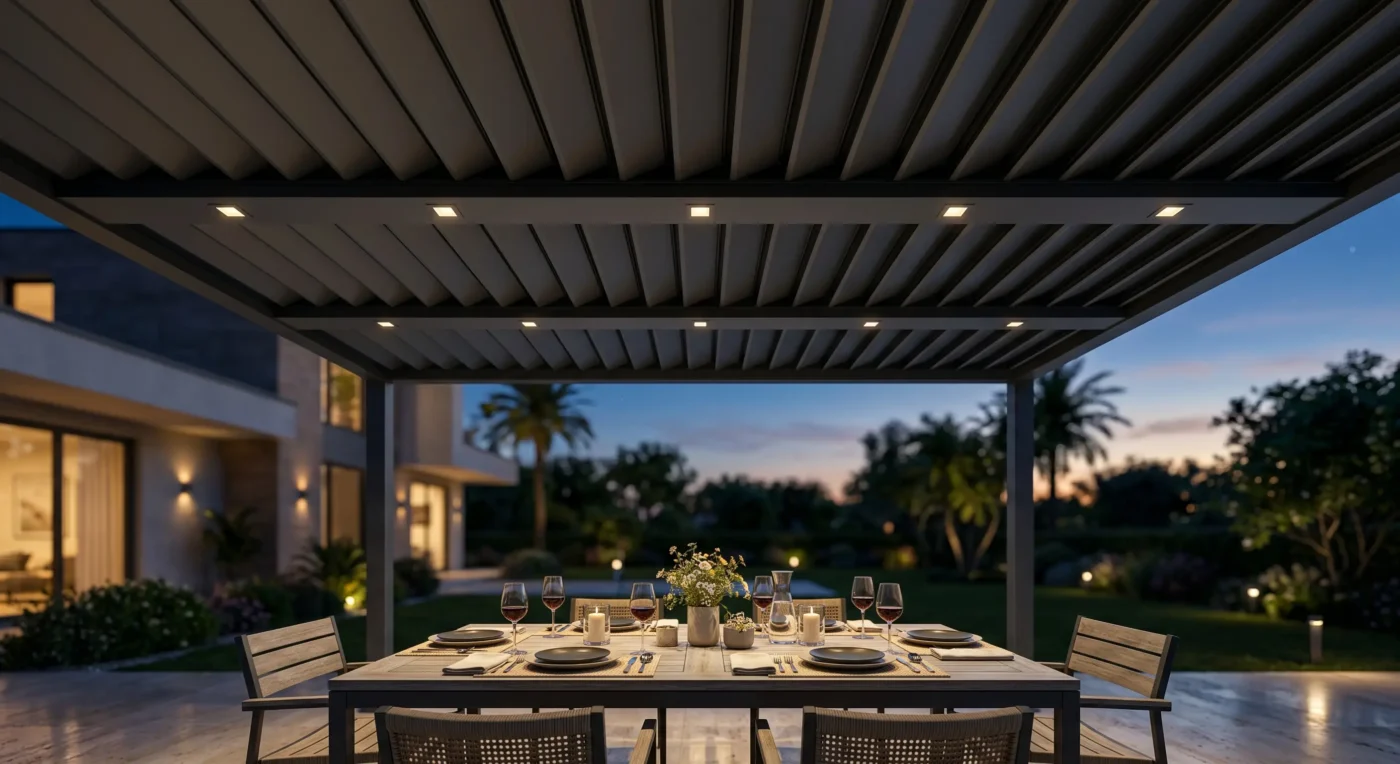
For focused illumination, recessed puck lights mounted in the perimeter beams or the overhead louver structure provide critical task-level brightness exactly where it is required — such as over an outdoor kitchen island or dining table — without overwhelming the ambient space. High-quality OEM models utilize microscopic 2.5-inch square designs or directional micro-spotlights that blend seamlessly into the architecture. Operating at highly efficient low wattages (e.g., 2.5W to 5.5W), these fixtures deliver precise lumen output while keeping power consumption and thermal output strictly regulated.
Post-Mounted Sconces and Pathway Integration
Vertical illumination softens the harsh geometry of the metal structure and grounds the pergola within the broader landscape design. By integrating micro post lights or modern architectural sconces directly into the vertical aluminum uprights, the pergola is instantly transformed from a yard accessory into a defined outdoor room. Furthermore, providing automated edge-lit pathway lighting reinforces safety while seamlessly tying the specific architecture of the pergola into the larger estate.
Technical Specifications for Margin Protection
The technical specification of these fixtures is a critical factor in margin retention. High upfront ASPs are instantly eroded if a manufacturer faces high warranty claim rates due to water ingress or electrical failure. Housings must feature marine-grade aluminum or stainless steel construction with IP65+ waterproof ratings. These materials must be engineered to resist UV degradation, coastal salt corrosion, and extreme temperature fluctuations ranging from -20°F to 120°F. Providing this exact level of industrial durability is what justifies the premium price tag to the end-user and ensures long-term profitability for the manufacturer.
Intelligent Automation: The Brains of the Operation
While premium illumination provides the immediate aesthetic value and emotional appeal, automation provides the functional lock-in that defines modern luxury. The convergence of the Internet of Things (IoT) and outdoor living has permanently elevated the pergola from a static asset to a dynamic environment. Data from the American Institute of Architects (AIA) indicates that seamlessly blended indoor-outdoor spaces and covered outdoor structures remain among the highest requested design features globally, reflecting a major consumer shift from merely placing “amenities outside” to demanding “indoor-quality living outside.” Achieving true indoor quality in an outdoor environment relies entirely on smart control infrastructure.
Autonomous Environmental Sensor Integration
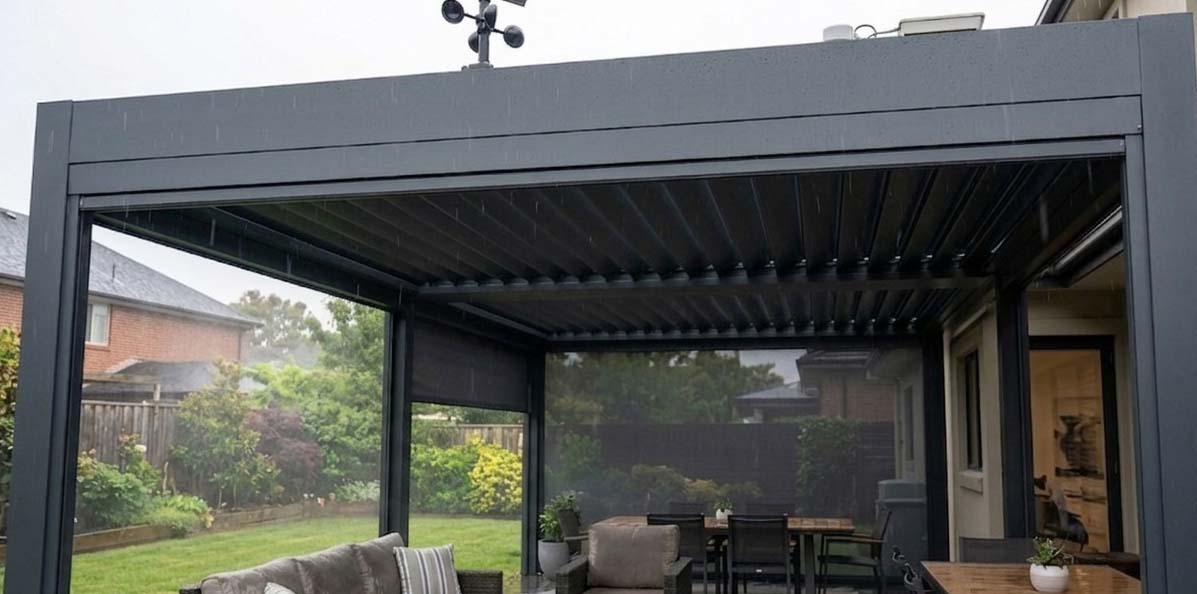
The defining technological feature of a premium pergola is its ability to react autonomously to environmental volatility. Smart pergolas utilize advanced sensor arrays that continuously collect real-time data on precipitation, wind speed, solar radiation, and ambient temperature.
When rain is detected, the automated system can close the louvers within three seconds, engaging the integrated hidden gutter systems to channel water away and protect the occupants and expensive outdoor furnishings beneath. Conversely, wind sensors continuously track airspeed; if gusts exceed structural safety thresholds (e.g., 90 km/h), the system overrides all other commands and autonomously opens the louvers. This action immediately reduces aerodynamic uplift, protecting the structural integrity of the pergola during severe weather events. This level of automated climate regulation not only enhances user convenience but significantly reduces the risk of catastrophic storm damage — a critical selling point that justifies a premium valuation for both residential buyers and commercial operators.
App Architecture and Voice Command Ecosystems
The era of the single-function, easily misplaced radio-frequency (RF) remote control is effectively over for the premium market. High-margin systems require comprehensive, beautifully designed digital interfaces. Leading systems connect directly to dedicated smartphone applications, allowing users to adjust louver angles with granular precision (from 0 to 150 degrees), dim specific lighting zones, and manage accessory systems from anywhere in the world.
Integration with mainstream voice assistants — such as Amazon Alexa, Google Assistant, and Apple Home — translates complex mechanical operations into frictionless, zero-touch user experiences. The ability to issue a simple command like “set patio to evening mode,” which simultaneously dims the integrated LEDs to 30 percent, rotates the louvers to block setting sun glare, and activates optional infrared heaters, represents the pinnacle of the modern outdoor luxury experience.
The Matter Protocol and the End of Ecosystem Fragmentation
As the smart home device market rapidly expands — projected to see massive double-digit CAGR over the coming decade — ecosystem fragmentation has become a significant barrier to consumer adoption. Historically, consumers were forced to choose between proprietary silos, finding that a lighting system compatible with Apple Home might be entirely invisible to Amazon Alexa.
The introduction of the Matter protocol, developed and overseen by the Альянс по стандартам связи (CSA), is fundamentally revolutionizing device interoperability. Matter is an open-source, industry-unifying standard that allows smart devices to communicate seamlessly across all major platforms simultaneously, without requiring proprietary, brand-specific network bridges.
For B2B pergola manufacturers, adopting Matter-compliant silicon for their lighting and control modules is no longer optional; it is a strategic imperative. Utilizing Thread — a low-power, low-latency IPv6 mesh networking protocol designed specifically for smart homes — alongside standard Wi-Fi and Bluetooth LE ensures that the pergola’s electrical systems are future-proofed, highly responsive, and capable of operating locally without the latency of cloud-based round trips.
Retailer data reinforces the financial impact of this integration: Matter-labeled products tend to convert at meaningfully higher rates than non-Matter alternatives in equivalent price tiers. Furthermore, the simplified, universal commissioning process drastically reduces post-sale IT support tickets and product return rates, directly protecting the manufacturer’s bottom line.
| Protocol Standard | Primary Function in Smart Pergolas | Key Manufacturing & Consumer Advantage |
|---|---|---|
| Wi-Fi (802.11) | High-bandwidth data transfer, Over-The-Air (OTA) firmware updates | Ubiquitous connection; remote access from anywhere globally |
| Thread | Low-power, low-latency IPv6 mesh networking for sensors and lights | Self-healing network, no single point of failure, immediate local response |
| Bluetooth LE | Initial device commissioning, onboarding, and secure pairing | Frictionless setup, reducing support calls to the dealer |
| Matter | Universal application-layer protocol across all major ecosystems | “Buy once, works everywhere” interoperability (Apple, Google, Amazon, Samsung) |
The Commercial ROI Multiplier: Hospitality and B2B Applications
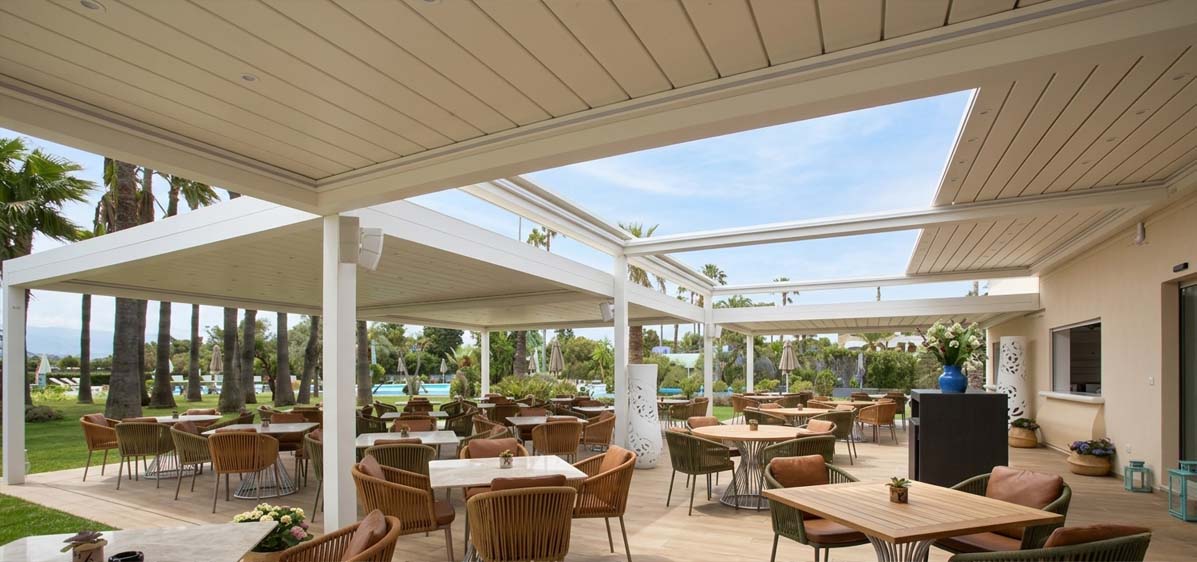
The massive margin expansion driven by smart lighting and automation is not limited to the residential sector. In the commercial B2B market — which comprises restaurants, luxury hotels, country clubs, and event venues — the financial logic of an automated pergola is tied directly to real estate monetization and revenue generation.
For a hospitality business, an unprotected outdoor patio represents a highly variable income stream that is entirely dependent on the weather forecast. Empty patios during peak dining hours due to sudden rain or extreme sun represent a direct, unrecoverable hit to profitability. By installing a heavy-duty, motorized aluminum pergola equipped with integrated perimeter lighting, targeted task illumination, and autonomous rain sensors, a restaurant transforms a seasonal, risky patio into a fully operational, year-round dining room.
This transformation unlocks a reliable stream of high-margin event revenue. A structure equipped with intelligent climate control allows hotels to charge a premium daily fee for private, covered, luxury experiences, yielding an extremely fast Return on Investment (ROI) on the capital expenditure.
Manufacturers positioning their product lines to commercial buyers must aggressively leverage this ROI narrative. Because these advanced systems can integrate seamlessly with centralized building management and automation systems (BMS), facility managers can optimize electrical use by scheduling lighting and shading based on astronomical time clocks, occupancy sensors, or daylight harvesting algorithms. This industrial-scale energy management prevents the “greenhouse effect,” reduces the thermal load on the main building, and significantly lowers operational overhead. A pergola that actively saves a business money on HVAC costs while generating net-new table revenue is a product that commands premium, undiscounted pricing.
Manufacturing Strategy: Modularity and OEM Partnerships
While the financial arguments for integrating advanced lighting and control systems are irrefutable, manufacturers must navigate severe technical and operational challenges to successfully deploy these complex upgrades at a global scale.
Modular Engineering and the Phased Upgrade Path
To maintain manufacturing efficiency and protect gross margins, pergola profiles must be engineered from the ground up with modularity in mind. The most successful and profitable OEM designs on the market feature pre-engineered mounting points, hidden conduit channels, and standardized power access points. This architectural foresight allows for the seamless addition of lighting, zip screens, and sensors without requiring custom structural modifications on the assembly line or improvised, dangerous drilling on the final job site.
This modularity supports a highly lucrative phased upgrade strategy. Distributors and regional dealers can stock a standardized base aluminum frame to keep inventory costs predictable, while offering LED lighting, privacy screens, and smart controls as high-margin, aftermarket accessories. Lighting typically provides the fastest and most reliable return on investment for the end-user because it extends usable hours immediately without fundamentally altering the physical footprint of the structure.
The Pitfalls of In-House Development vs. Specialized OEM Synergy
The rapid, relentless evolution of IoT connectivity standards, LED diode efficiency, and environmental sensor calibration means that traditional aluminum fabricators and metal extruders are rarely equipped to develop these electrical components in-house. Attempting to build proprietary software and hardware stacks inevitably results in substandard systems that suffer from high failure rates, security vulnerabilities, and rapid obsolescence.
Partnering with professional OEM and ODM manufacturers who specialize exclusively in pergola lighting and smart control systems mitigates these massive operational risks. A dedicated, expert technology partner provides invaluable assets to the manufacturer:
- Соблюдение нормативных требований: Certified components that meet rigorous international safety, electrical, and waterproof standards (e.g., CE, ISO, IP67, UL).
- Assembly efficiency: Pre-configured wiring harnesses and plug-and-play modules that reduce on-site installation time from days to mere hours, protecting the dealer’s labor margin.
- Brand elevation: White-labeled smartphone applications and Matter-certified modules that carry the pergola manufacturer’s logo, elevating the brand’s perceived technological sophistication.
- Lifecycle support: Continuous over-the-air (OTA) software updates and compatibility maintenance, ensuring the product remains functional as the broader smart home ecosystem inevitably evolves.
By outsourcing the extreme technological complexity to specialized OEM partners, pergola manufacturers can maintain their core focus on structural engineering, supply chain logistics, and dealer network expansion — all while effortlessly capturing the margin premiums associated with high-end smart technology.
Redefining the Product Category
The global outdoor structure market is undergoing a ruthless and permanent stratification. Manufacturers that continue to sell static, unlit aluminum frameworks are competing in an increasingly saturated, highly price-sensitive commodity market where margins will only continue to compress. In stark contrast, those who embrace the seamless integration of sophisticated LED lighting arrays, autonomous environmental sensors, and Matter-compliant smart controls are successfully redefining their products as essential, luxury components of the modern smart home.
This critical technological layer shifts the fundamental value proposition away from the raw cost of extruded metals and directly toward the quality of the user experience. By delivering automated climate protection, limitless atmospheric customization, and frictionless interoperability with the user’s existing digital life, manufacturers unlock the ability to raise Average Selling Prices significantly while disproportionately expanding their net profit margins.
For European and American B2B buyers, distributors, and global pergola brands, the path forward is singular and clear: the integration of intelligent lighting and control systems is no longer an optional, novelty accessory. It is the defining architectural feature that separates high-margin lifestyle infrastructure from basic yard shade. This integration will drive the next decade of explosive growth in the outdoor living sector. Forward-thinking manufacturers seeking to elevate their product lines, escape the commodity trap, and secure absolute dominance in the premium market are strongly encouraged to partner with dedicated OEM lighting and control specialists to engineer the autonomous outdoor spaces of the future.
Further reading on the standards and research referenced above: McKinsey & Company — The Power of Pricing, the Matter standard from the Connectivity Standards Alliance, the Thread Group, and the American Institute of Architects.

Пингбэк: Cost of a Louvered Pergola: How Motors, Controls, Lighting, and Sensors Affect Price
Пингбэк: Как производители пергол могут заменить отдельные пульты дистанционного управления единой интегрированной системой управления освещением и жалюзи