


In the field of lighting, “white light” is not a single color.
What we commonly refer to as color temperature (measured in Kelvin) does not describe how “hot” a light source is, but rather:
whether this beam of white light appears more yellowish, whiter, or bluer to the eye.
The concept of color temperature originates from blackbody radiation in physics:
An ideal blackbody emits light of different colors at different temperatures. The lighting industry adopts this model, using “the color emitted by a blackbody at a specific temperature” as a reference for white light.
This established a consensus system:
2700K: Yellowish, warm
3000K: Neutral-warm
4000K: Neutral white
5000K and above: Cooler, bluish
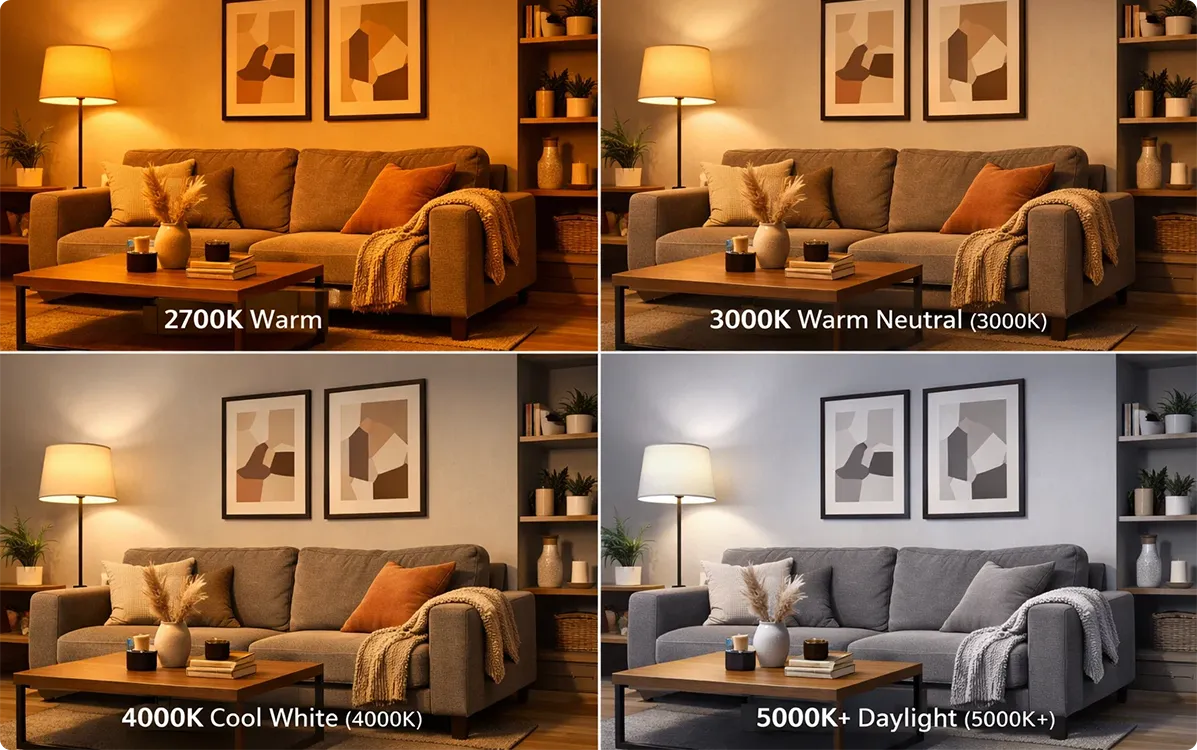
Here lies a counterintuitive point:
Lower values appear visually warmer; higher values appear visually cooler.
Luminous flux (lm/lux): How much light is present
Color temperature (K): Whether light appears yellowish or bluish
Color rendering index (CRI): How well it reproduces the colors of objects
These three properties are independent of each other.
You can have:
Very bright 2700K
Very dim 5000K
Cool light with high CRI
Warm light with low CRI
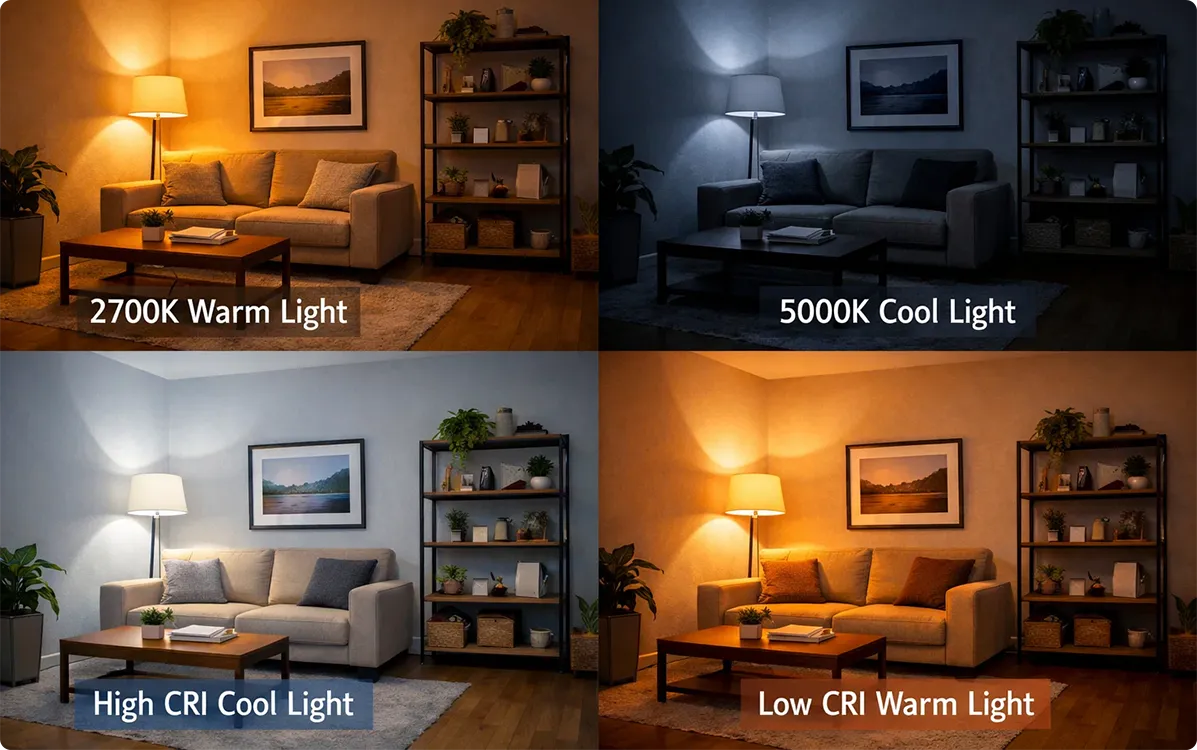
It is precisely because color temperature is an independent dimension that it has given rise to subsequent technologies like “dual-color temperature” and “adjustable white light.”
Because human perception is strongly coupled with color temperature and brightness.
In natural environments:
Daytime: Bright + Cooler
Dusk: Dimmer + Warmer
Human circadian rhythms and emotions have adapted to these changes.
This creates two distinct lighting demands:
I just want lights to “behave like incandescent bulbs”—darker and warmer
I want precise color temperature control tailored to time, setting, and function
Thus, the industry has pursued two technical paths:
Dim to Warm
Tunable White
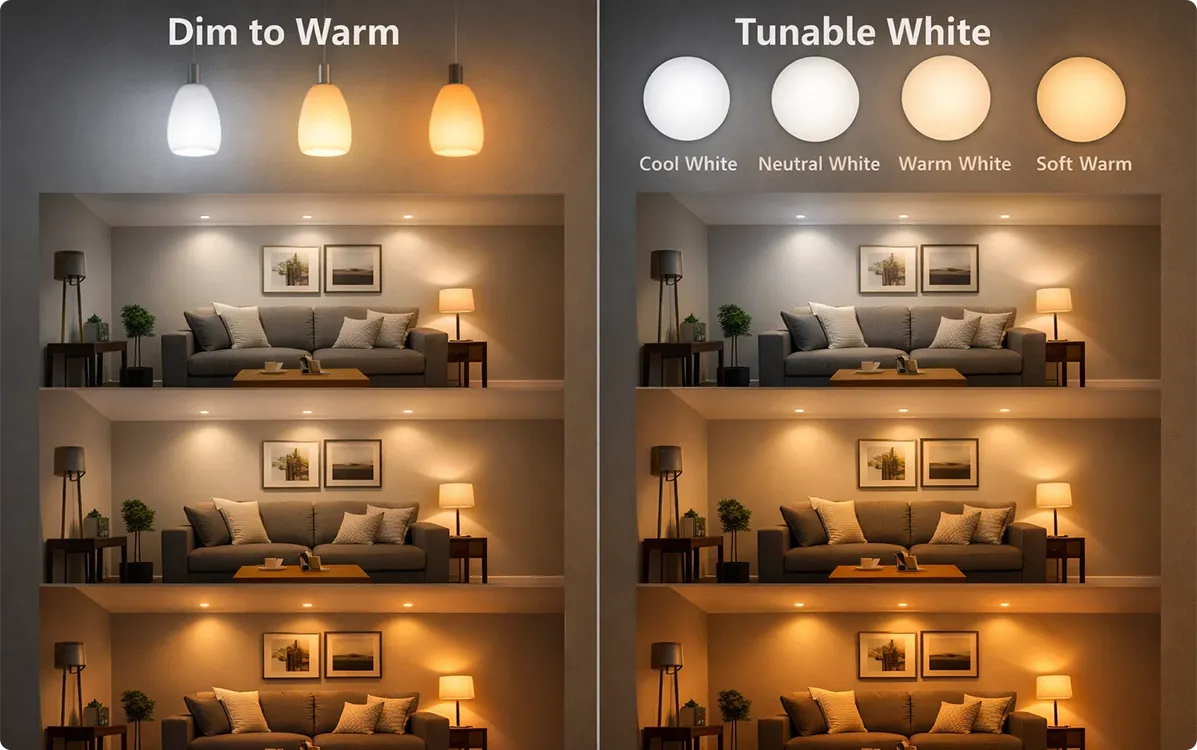
1. What is Dim to Warm?
The core feature of Dim to Warm is:
As brightness decreases, color temperature automatically shifts toward warmer tones.
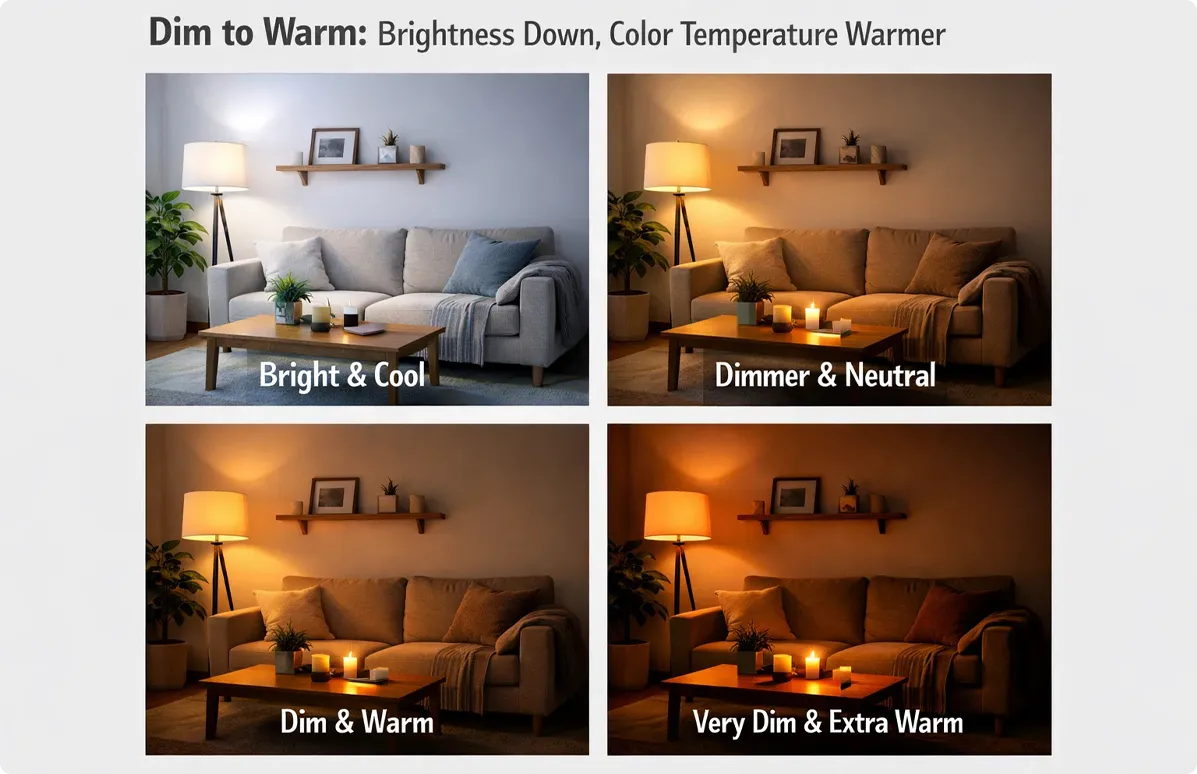
Users control only one dimension: brightness.
Color temperature changes “follow” this adjustment rather than being independently controlled.
2. How is Dim to Warm Achieved?
Inside the fixture, there are typically two types of LEDs:
White LEDs with higher color temperatures
Ultra-warm LEDs (1800–2200K)
Parlaklık değiştiğinde:
Sistem, her iki LED tipinin çıkışını önceden ayarlanmış bir orana göre ayarlar
Sabit bir “parlaklık-renk sıcaklığı eğrisi” oluşturma”
Bu eğri fabrikada programlanmıştır ve kullanıcılar tarafından değiştirilemez.
3. Loştan Sıcağa Özelliklerin Özeti
Avantajlar:
Kullanımı son derece sezgisel
Renk sıcaklığını anlamayı gerektirmez
“Yanlış ince ayar” yapmak zor”
Halojen / akkor aydınlatma deneyimlerini simüle etmek için ideal
Sınırlamalar:
Renk sıcaklığı bağımsız olarak kontrol edilemez
Sistem düzeyinde akıllı aydınlatma için uygun değildir
Gelecekteki sahne genişlemesini sınırlar
4. Tipik Uygulama Senaryoları
Otel misafir odaları
Restoranlar
Üst düzey konutlar
Ortam ticari alanları
Tek cümlelik özet: Dim to Warm, “ürün deneyimi odaklı” çift renkli bir sıcaklık çözümüdür.
1. Ayarlanabilir Beyaz nedir?
Ayarlanabilir Beyaz anlamına gelir:
Parlaklık ve renk sıcaklığının tamamen ayrıştırılması, her birinin ayrı ve hassas bir şekilde kontrol edilmesini sağlar.
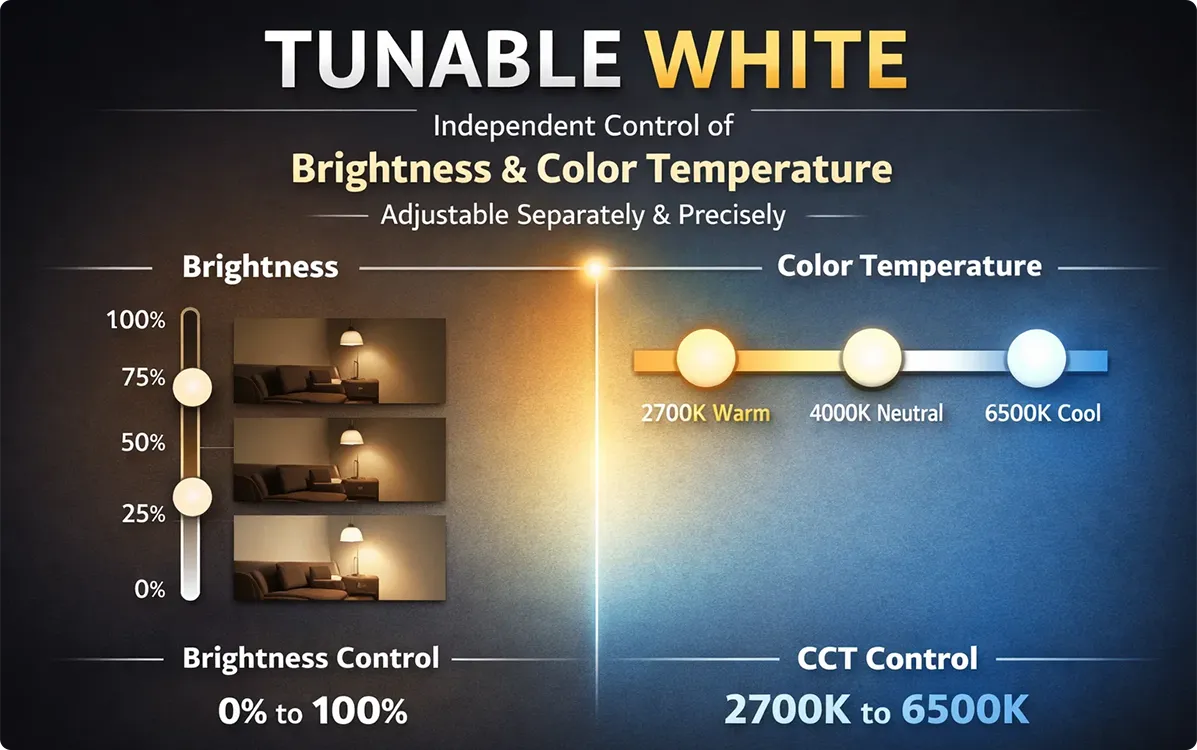
Kullanıcılar veya sistemler ışığa açıkça talimat verebilir:
Şimdi ne kadar parlaklığa ihtiyaç var
Şu anda hangi renk sıcaklığına ihtiyaç duyuluyor (örn. 3500K, 4200K)
2. Ayarlanabilir Beyazın Uygulanması
Armatür ayrıca iki tip LED kullanmaktadır:
Sıcak Beyaz (örn. 2700K)
Soğuk Beyaz (örn. 6500K)
Fark şurada yatıyor:
İki LED kanalı bağımsız olarak çalışır
Kontrol sistemi karıştırma oranını gerçek zamanlı olarak hesaplar
Hedef renk sıcaklığının çıktısını almak için
Bu tipik olarak şunları gerektirir:
DALI DT8
Veya Casambi / KNX / DMX gibi sistemler
3. Ayarlanabilir Beyazın Avantajları ve Zorlukları
Hassas, programlanabilir renk sıcaklığı
İnsan Merkezli Aydınlatmayı (HCL) destekler
Sistematik, standartlaştırılmış projeler için uygundur
Senaryolar tekrarlanabilir ve ölçeklendirilebilir
Zorluklar:
Daha yüksek maliyet
Sistem karmaşıklığı
Yüksek devreye alma eşiği
Güç kaynağı ve ışık kaynağı tutarlılığı konusunda yüksek talepler
4. Tipik Uygulama Senaryoları
Ofis Aydınlatması
Eğitim Alanları
Medical Lighting
Museums
Premium Commercial & Smart Buildings
In a nutshell:
Tunable White is a “system capability-driven” dual-color temperature solution.
Dimension |
Dim to Warm
|
Tunable White
|
Color Temperature Control |
Adjusts with brightness changes |
Independently controllable |
User Participation |
No need to understand |
Requires system |
Kontrol Protokolü |
Thyristor/0-10V/ DT6 |
DT8 / Smart System |
Debugging Complexity |
Low |
Yüksek |
Maliyet |
Lower |
Higher |
Positioning |
Ambience Experience |
Functionality + Experience |

Pingback: Panjurlu Pergolalar için RGB, RGBW ve Mono LED Kontrolü: Teknik Özellikler Kılavuzu