


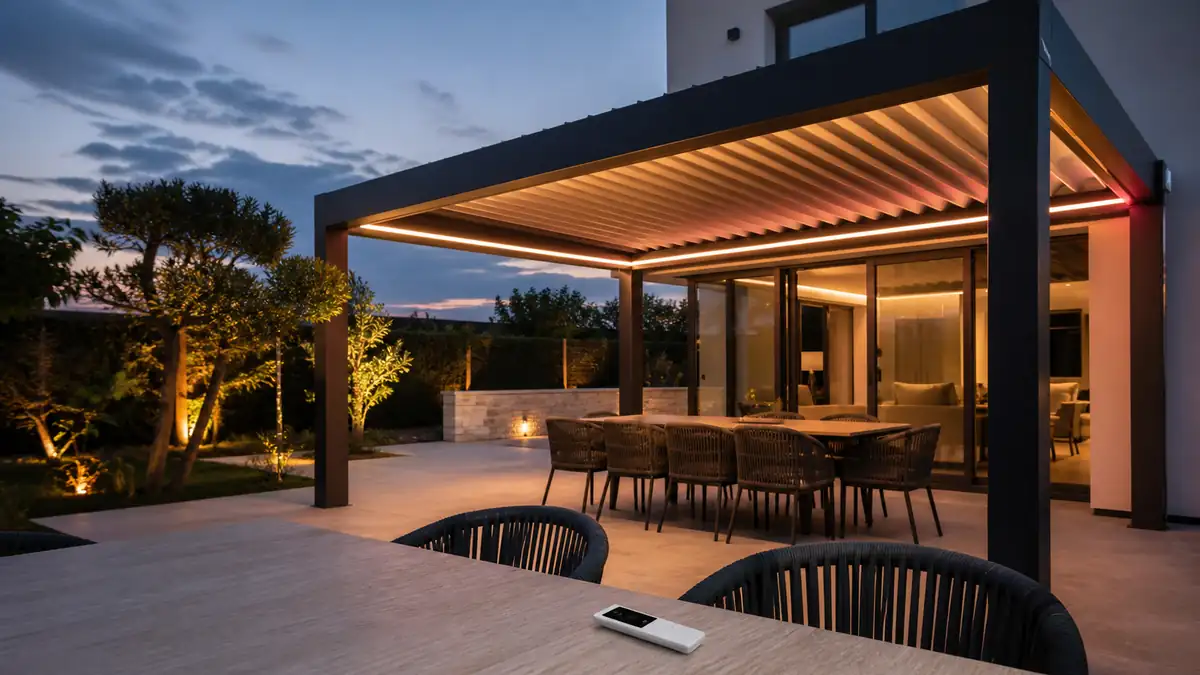
A pergola product line does not become distinctive because the remote has more buttons. It becomes distinctive when the control system turns comfort, safety, lighting, weather response, installation, and brand experience into one repeatable product architecture.
Points clés à retenir
- Custom controls differentiate a pergola line only when they improve the product system, not just the feature list.
- The strongest OEM strategy is to build control tiers around real buyer segments: dealer, homeowner, hospitality, and premium residential.
- Lighting, louver motion, sensors, RF range, app control, wiring, and service logic should be planned as one platform.
- Manufacturers gain more defensible value when the control experience carries their own brand language and installation logic.
Many pergola brands now offer similar structural promises: aluminum frames, motorized louvers, rain protection, integrated gutters, and optional lighting. That makes differentiation harder. When a dealer or distributor compares two product lines, the frame specification is only one part of the decision. They also judge how easy the product is to sell, install, explain, service, and upgrade.
This is where custom control features become strategically important. The control system is the part of the pergola that the customer touches every day. It also decides how smoothly the installer connects motors, lighting, sensors, and accessories on site. If the control design is generic, the product feels generic. If it is well planned, it can make the whole pergola line feel more mature.
À VLEDSTAR, our work sits inside this exact gap. We develop and manufacture pergola lighting products and integrated control systems for outdoor structures, including louvered pergolas, retractable roofs, verandas, patios, awnings, carports, and related outdoor living systems. From that manufacturing perspective, the best control strategy starts with a product-line question, not a gadget question.
Why Are Custom Controls Becoming a Product-Line Issue?
Custom controls are becoming a product-line issue because the control layer now shapes the perceived quality of the entire pergola. A buyer may first notice the frame, but long-term satisfaction depends on how reliably the roof moves, how naturally the lights dim, and how confidently the system reacts to rain, wind, snow, and daily use.
Search results around smart pergolas usually focus on homeowner benefits: app control, voice assistants, remote operation, comfort scenes, and weather automation. That content reflects real demand, but it often stops before the OEM problem begins. Manufacturers need to know how those features affect SKUs, wiring, training, warranty, and dealer confidence.
The deeper question is not whether a pergola can be smart. It is whether the control system can support a full product range without creating a different engineering problem for every order. A manufacturer selling through multiple dealers, climates, and price tiers needs a control platform that can scale.
The manufacturer view
A control feature has strategic value when it reduces field decisions, supports clear product tiers, and gives the brand a control experience competitors cannot easily copy.
Why Do Many Smart Pergola Features Still Feel Generic?
Many smart pergola features feel generic because they are presented as add-ons rather than as part of a clear product architecture. App control, weather sensors, remote operation, and lighting scenes can all create value, but they do not automatically make one pergola line more defensible than another.
That creates a useful opening. A manufacturer-focused article should not repeat the same surface-level benefits. It should answer a more commercial question: how can a pergola company make its line easier for dealers to install, easier for customers to understand, and harder for competitors to match?
Across the pergola and outdoor automation market, the most visible messages often center on convenience: open the louvers from a phone, let a sensor respond to rain, adjust the lighting color, or connect the product to a smart-home ecosystem. These benefits matter, but they are not enough for manufacturers that need a differentiated OEM line.
Premium pergola brands position motorization and automated weather response as part of the luxury outdoor experience. Automation ecosystems discuss motors, sensors, remotes, and connected control. Standards bodies such as the Connectivity Standards Alliance also show why smart-home interoperability is becoming part of buyer expectation, even when RF remote control remains the daily workhorse for outdoor products.
The innovation space is therefore not a louder claim about being smart. It is a quieter, more defensible position: own the way the pergola behaves. The more a manufacturer defines the control logic, wiring rules, channel structure, interface language, and upgrade path, the less the product looks like a collection of sourced parts.
Which Control Features Actually Differentiate a Pergola Line?
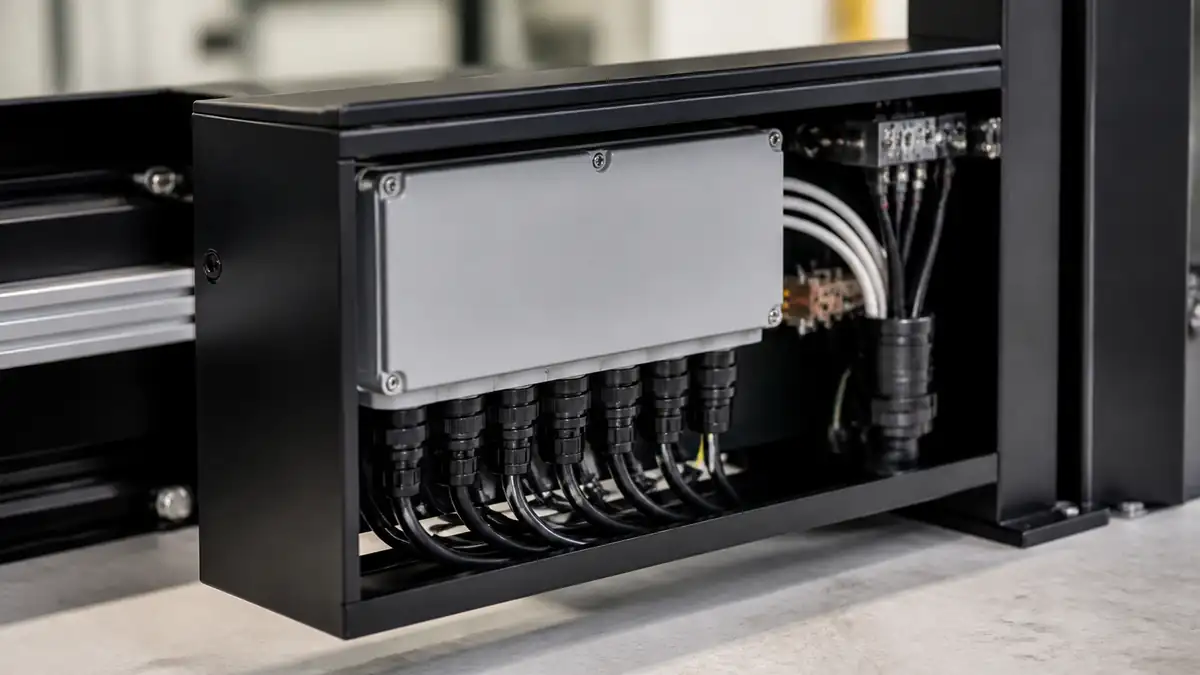
The features that differentiate a pergola line are the ones customers can feel and dealers can repeat. App control alone is not enough. A stronger control package combines louver movement, lighting zones, weather response, remote range, physical interfaces, connector design, and service procedures into one planned system.
For most manufacturers, differentiation should start with a base platform and then expand into tiered packages. The base platform protects installation consistency. The higher tiers add richer user experience and commercial value. This lets the product team build a ladder instead of adding random options.
1. A Control Unit That Supports the Whole Pergola
A premium pergola should not need separate controllers for every major function. When louvers, LED strips, spotlights, sensors, and interfaces are coordinated through one unit, the product becomes easier to specify and easier to train.
VLEDSTAR’s unité de commande de pergola is a useful example of this architecture. It is designed for motorized louvered and retractable pergola manufacturers, with outputs for mono LED lighting, RGB lighting, linear actuators, tubular motors, and weather sensors. It also supports RF remote, Tuya app, and LCD touchscreen control.
The point is not only component count. The bigger value is coordination. A manufacturer can define a standard control heart for multiple models, then customize the channel map, enclosure, firmware, wiring harness, and interface branding around different product tiers.
2. Lighting Scenes That Match Real Outdoor Use
Lighting is often sold as an option, but it can become a product signature. Warm task lighting for outdoor kitchens, soft perimeter lighting for residential patios, RGB ambience for hospitality spaces, and focused downlighting for dining areas all communicate different product positions.
The mistake is treating lighting as decoration after the pergola design is already finished. For a manufacturer, lighting should be engineered into beam profiles, wiring paths, driver capacity, connector locations, and control zones. A lighting feature that looks beautiful but installs poorly will not help the dealer network.
Sur le solutions d'éclairage pour pergolas page, VLEDSTAR presents lighting as a system for manufacturers: downlights, wall lights, strip lights, Tuya smart controllers, retrofit aluminum profile kits, and integrated control options. That is the right direction for differentiation because the lighting package becomes part of the brand’s product architecture.
3. Weather Logic That Feels Predictable
Weather automation can be a strong selling point, but only if it behaves in a way users trust. Rain, wind, sun, and snow inputs need more than simple triggers. They need priority rules, delays, thresholds, recovery behavior, and a clear relationship with manual commands.
For example, a rain command may need to override a comfort lighting scene. A wind command may need to prioritize roof or screen safety. Snow response may need to avoid a false sense of protection if the structure has specific load limits. In Europe and North America, buyers increasingly expect automation, but they still blame the pergola brand when automation feels erratic.
A strong control system should make this logic visible in dealer documents and user manuals. The dealer should know what the system will do before the weather event occurs. The homeowner should not have to guess why the roof moved.
4. A Brand-Owned Remote and Interface Strategy
The remote is not a small accessory. It is the most visible expression of the control system. A generic remote can make an expensive pergola feel assembled from commodity parts. A well-designed remote and interface language can make the product feel unified.
This does not mean every manufacturer must develop a fully proprietary ecosystem. Many brands need compatibility with established motor or smart-home systems. Still, the interface should reflect the product line: channel naming, button grouping, scene logic, pairing procedure, printed symbols, app labels, and dealer setup steps.
Manufacturers comparing ecosystems can use VLEDSTAR’s guide to Somfy, Bond, Tuya, Teleco, and custom RF pergola controls as a starting point. The main choice is not fashionable technology. It is the control experience your market can sell and support.
How Should Manufacturers Turn Features Into Product Tiers?
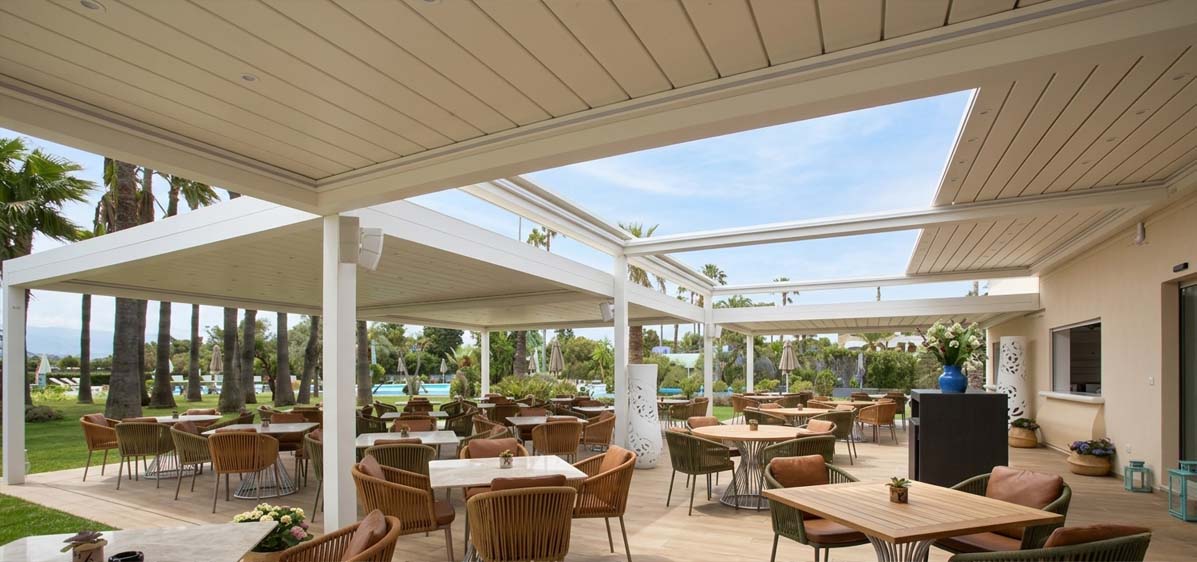
Manufacturers should turn control features into clear product tiers because buyers need a reason to trade up. A custom control platform can support entry, mid-range, premium, and commercial pergola lines without forcing the factory to redesign the system from zero for every model.
A practical tiering strategy starts with the use case. The entry package may focus on reliable louver and single-white lighting control. The premium residential package may add RGBW scenes, app control, multi-zone grouping, and branded remote logic. The hospitality package may need central control, staff-friendly wall panels, service access, and stronger documentation.
| Product Tier | Control Focus | Differentiation Value | Dealer Benefit |
|---|---|---|---|
| Core residential | RF remote, louver movement, one or two white lighting zones | Reliable daily use without overcomplication | Fast training and fewer setup decisions |
| Premium residential | Multi-zone lighting, RGB or RGBW scenes, app control, sensor automation | Clear reason to upgrade from basic motorization | More upsell value with the same control platform |
| Dealer pro package | Pre-wired harnesses, labelled ports, standardized pairing, test procedure | Brand seen as easier to install and service | Lower support burden and repeatable jobsite workflow |
| Commercial and hospitality | Group control, wall panels, staff modes, weather priority, service access | Better fit for restaurants, hotels, resorts, and outdoor venues | More predictable multi-bay setup and maintenance |
This tier structure also helps procurement. Instead of sourcing a separate remote, driver, receiver, sensor box, and app module for each product tier, the manufacturer can work from a shared platform. That platform can then be configured by firmware, wiring, enclosure, and accessory set.
For more detailed component planning, the Liste de contrôle de la nomenclature du système de commande de la pergola is a useful internal reference. A good BOM does not only list parts. It clarifies which functions are standard, which are optional, and which should never be left for the installer to improvise.
Where Does Customization Create Real OEM Value?
Customization creates real OEM value when it protects the brand’s product promise. Logo printing alone is weak differentiation. Stronger customization changes the way the system installs, operates, upgrades, and supports the exact pergola line the manufacturer wants to sell.
There are five customization areas worth prioritizing.
Firmware and Function Logic
Firmware defines how the pergola behaves. It controls dimming curves, RGB scene order, motor response, group control, sensor priority, pairing memory, and recovery after power interruption. For manufacturers, firmware is where a control system stops being generic.
A useful firmware brief should describe the intended product tiers, motor types, lighting loads, weather logic, default scenes, service mode, and market-specific interface expectations. The goal is to make the system feel intentional from the first sample.
Channel Mapping and User Language
Many control systems fail at the language level. The channel numbers may make sense to the engineer, but not to the homeowner or installer. A manufacturer can differentiate by making zones easy to understand: roof, perimeter light, dining light, RGB scene, left screen, right screen, or full group.
Clear channel mapping matters most when one remote or app controls multiple functions. VLEDSTAR’s article on controlling actuators, mono LED zones, and RGB lighting from one pergola remote goes deeper into this kind of configuration. For product-line strategy, the larger lesson is simple: interface logic is part of brand quality.
Enclosure, Harness, and Connector Design
Outdoor controls live in difficult spaces. Aluminum profiles, narrow cavities, condensation, cable bends, service access, and installer habits all affect reliability. A compact control box, waterproof connector strategy, keyed cable layout, and clear labeling can make a real difference.
This is also where standards-oriented thinking belongs. IP protection should be selected according to the installation location and exposure level, not used as a vague marketing term. The IEC explanation of IP ratings is a helpful starting point for teams that need to align internal language around dust and water protection.
Compliance Documentation
Controls involve power electronics, wireless communication, and outdoor electrical use. For Europe and North America, documentation can affect distributor confidence, customs clearance, and project acceptance. Manufacturers should discuss compliance early, especially when radio frequency functions or smart modules are part of the system.
The European Commission’s CE marking guidance and the U.S. eCFR text for 47 CFR Part 15 are useful reference points for teams planning market entry. They do not replace product-specific testing, but they help frame the right questions before production.
Packaging and Dealer Material
A control system is only as good as the way it reaches the jobsite. Packaging, labels, cable diagrams, QR-linked videos, sample kits, and replacement part codes can reduce confusion. For dealer networks, the best controls feel self-explanatory before power is even connected.
This is why VLEDSTAR often treats marketing and technical assets as part of the OEM package. A manufacturer does not only need a box of electronics. It needs the materials that help sales teams, installers, distributors, and end users understand the value of the system.
How Can Controls Reduce Dealer Friction?
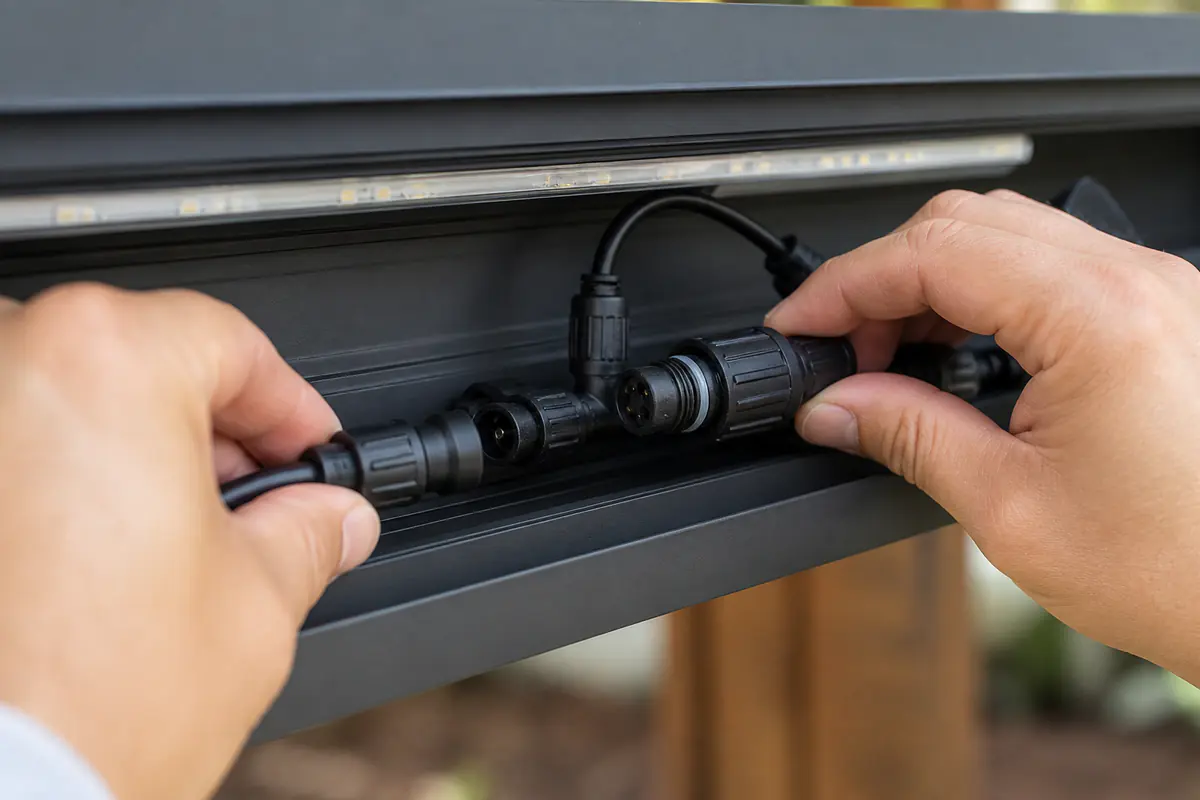
Controls reduce dealer friction when they remove interpretation from the installation process. A dealer should not have to decide which receiver belongs to which light zone, how to pair every motor, how to protect each joint, or how to explain mixed app and remote behavior to the homeowner.
The more a product depends on field improvisation, the harder it is to scale through dealers. Every installer develops a slightly different method. Every support team hears slightly different failure descriptions. Every new accessory adds another possible mismatch.
Integrated controls help by turning electrical integration into product assembly. Defined ports, labelled connectors, channel maps, test routines, and sample-based training give the dealer a repeatable workflow. For manufacturers selling across multiple regions, this consistency can be as valuable as the control feature itself.
VLEDSTAR’s article on how integrated controls reduce pergola installation labor looks at this dealer problem in more detail. For a differentiation strategy, the key point is that dealer-friendly design becomes a selling argument. A product that is easier to install is easier to recommend.
What Should Stay Standard, and What Should Be Custom?
The standard layer should protect reliability, while the custom layer should express the brand’s market position. Manufacturers often get this backward. They customize the visible parts first, then leave wiring, pairing, sensor logic, and service procedures too flexible.
A better approach is to standardize the risk-heavy areas: core controller architecture, electrical protection, motor safety logic, sensor hierarchy, waterproof connector principles, documentation format, and test procedure. These areas should be stable across the line because they protect quality.
Customization should then focus on the commercial layer: control tiers, interface branding, channel language, scene presets, enclosure fit, cable lengths, accessory bundles, sample kits, and packaging. This creates visible differentiation without making the engineering platform fragile.
A practical rule for OEM teams
Standardize the parts that affect reliability. Customize the parts that affect market fit, dealer workflow, and customer experience.
How Should a Manufacturer Choose a Control Partner?
A manufacturer should choose a control partner by looking beyond the sample. The first sample proves that functions can work. The real test is whether the supplier can support product-line planning, engineering changes, production consistency, documentation, and long-term spare parts.
Ask potential partners how they handle motor compatibility, RF range in aluminum structures, sensor logic, waterproof connectors, firmware changes, app ecosystem options, certification support, packaging, and batch testing. Also ask how they think about your dealers. If the supplier only talks about components, they may not understand the product-line problem.
For a more complete platform view, review VLEDSTAR’s système de contrôle de pergola. It shows the kind of integrated approach manufacturers can use to coordinate RGB lighting, mono lighting, actuators, tubular motors, weather sensors, long-range RF remote control, Tuya app control, touchscreen panels, multi-channel grouping, and outdoor protection.
Commercial buyers may need a different emphasis. Restaurants, hotels, resorts, and outdoor venues care about staff usability, group control, and service predictability. For that path, VLEDSTAR’s guide to commercial pergola control systems can help product teams separate residential luxury features from hospitality operating needs.
What Is the Strongest Position for a Differentiated Pergola Line?
The strongest position is to present controls as part of the pergola’s operating architecture. This gives the manufacturer a sharper claim than “we offer smart control.” It says the product line is easier to install, easier to sell, easier to upgrade, and more consistent across real outdoor use.
That position is especially valuable for European and North American manufacturers because mature buyers compare more than price. They ask about dealer support, smart-home compatibility, after-sales service, compliance, replacement parts, weather behavior, and premium options. A custom control system can answer those questions in a way that the frame alone cannot.
It also gives the sales team better language. Instead of selling isolated options, they can sell control packages: core comfort, premium ambience, dealer pro installation, commercial group control, or custom OEM platform. Each package has a clear role in the product line.
Custom control features should not make the product harder to understand. They should make the line easier to choose. When the control architecture is planned well, the manufacturer can offer more options with less confusion.
Build the Control Experience Before Competitors Define It for You
If your pergola line already includes lighting, motorized louvers, sensors, remotes, or app control, the next step is not simply adding more functions. The next step is deciding which control experience your brand should own.
VLEDSTAR develops and manufactures pergola lighting and integrated control systems for OEM programs. We can support control unit configuration, lighting package design, wiring and connector planning, firmware customization, remote and app control options, and sample kits for manufacturer evaluation.
Explore the Unité de contrôle de la pergola or contact VLEDSTAR through PergolaLights.net to discuss a control platform for your next product line.
FAQ
What makes a pergola control feature worth customizing?
A control feature is worth customizing when it improves the manufacturer’s product line, dealer workflow, or customer experience. Good examples include branded remote logic, channel mapping, lighting scenes, firmware behavior, waterproof wiring layouts, sensor priorities, and package-specific app settings.
Should a pergola manufacturer choose RF remote control or app control?
Most manufacturers should support both when the product tier justifies it. RF remote control is often the most reliable daily interface for outdoor use, while app control adds premium value, remote convenience, and smart-home appeal. The system should not depend only on cloud access for basic operation.
How can custom controls help dealers?
Custom controls help dealers by reducing field decisions. Labelled ports, plug-and-play waterproof connectors, defined channel maps, clear pairing steps, and repeatable test routines make installation faster and easier to teach across dealer teams.
Can one control platform support different pergola models?
Yes, if the platform is planned for modular outputs, firmware configuration, accessory options, and clear product tiers. A shared platform can support basic, premium, and commercial packages while keeping the core electrical architecture consistent.

Ping de retour: Scene Control for Pergolas: Dinner Mode, Storm Mode, Sunset Mode, and Dealer Presets
Ping de retour: Manual Override & Fail-Safe Pergola Controls | OEM Guide
Ping de retour: Pergola Lighting Controls for Outdoor Kitchens and Dining Areas
Ping de retour: Pergola Lighting Controls for Outdoor Kitchens | VLEDSTAR