


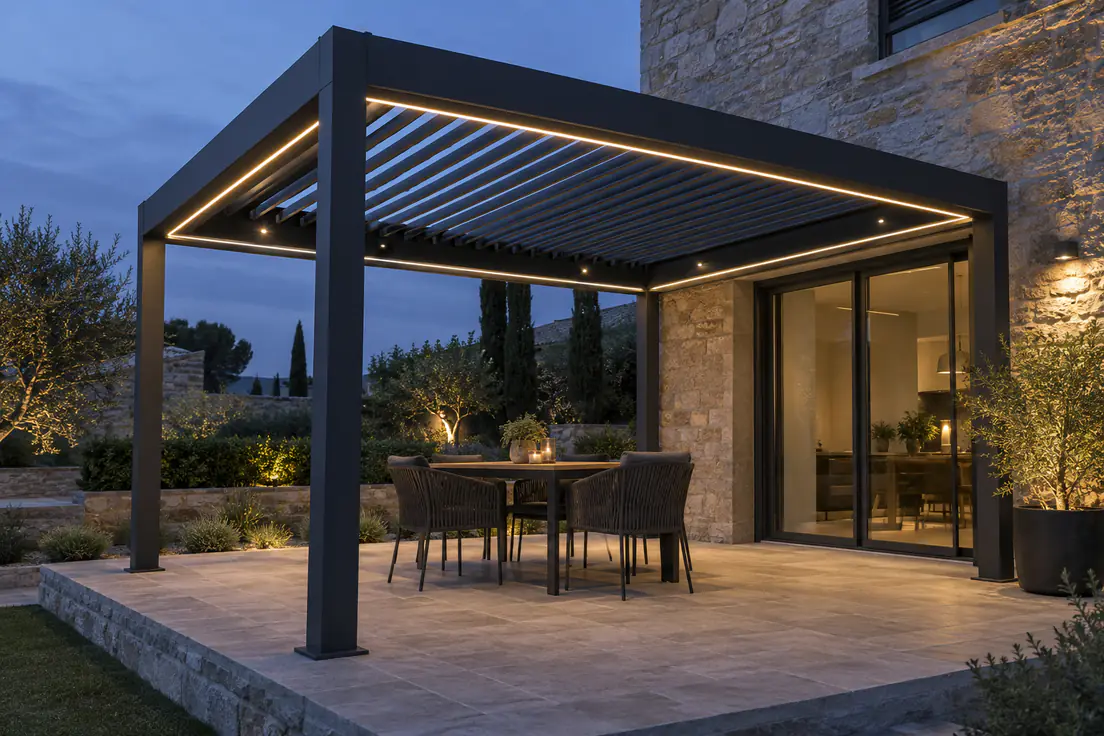
The controller looks inexpensive until a dealer has to open a finished pergola beam to replace it. By then, the cost includes diagnosis, travel, access, replacement parts, and a homeowner asking why a premium roof has stopped responding.
That possibility should shape how OEM buyers evaluate pergola control system suppliers. Our view is straightforward: approve a supplier when its engineering evidence, production controls, and service arrangements support the complete pergola you intend to sell. A successful demonstration is the beginning of that assessment.
VLEDSTAR develops and manufactures integrated pergola control systems alongside outdoor lighting. Working across those product categories makes one dependency especially clear: motor operation, dimming, wiring, power supply selection, and enclosure design have to agree with one another.
For European and North American manufacturers, these 15 questions turn a supplier conversation into an approval process. Each should produce something your engineering, purchasing, or service team can check before the order becomes a production commitment.
1. Which parts of the system do you design, manufacture, and take responsibility for?
Start by establishing who can actually resolve an integration problem. Ask which company controls the circuit design, firmware, radio configuration, wiring harness, and final assembly, and which elements come from outside suppliers. Outsourcing can work well when technical ownership remains clear.
A useful response includes the proposed bill of materials, the manufacturing location, and a named engineering contact. If the motor comes from one company and the LED driver from another, identify who investigates when motor startup resets the controller or interrupts the lights.
Put that responsibility in the supply agreement. Otherwise, a fault at the interface can move between companies while your dealer waits. We would favor a supplier that explains its boundaries precisely over one that describes every component as its own technology.
2. Can you prove compatibility with our exact motors and feedback devices?
A motor brand name is insufficient evidence of compatibility. The supplier needs the exact model, supply voltage, operating and startup current, duty cycle, limit arrangement, and control interface. A DC actuator, a mains-powered tubular motor, and a motor with an integrated radio receiver can require different connections.
Request an interface drawing and test the proposed motor on the actual mechanism. Where two actuators must move together, distinguish simultaneous switching from synchronization using position feedback. Ask what happens if one actuator stalls, a feedback wire fails, or the two sides lose alignment.
Compatibility also extends to replacement parts. Record the approved motor variants and the controller settings each requires. Our actuator and tubular motor integration guide explains the interface distinctions that buyers should resolve before selecting a control platform.
3. What can the controller operate at the same time?
Ask for the simultaneous operating limits of the proposed configuration. A remote’s group count, the number of independently controlled outputs, and the electrical capacity of those outputs describe different things. A large channel number alone tells you little about the usable system.
Have the supplier map every function: roof actuators, screens, white lighting, color lighting, sensors, and any external switching modules. Identify shared power limits and combinations that require sequencing. Heaters or other substantial loads may need a separately rated interface rather than a direct controller connection.
Then run the heaviest permitted combination in a representative enclosure. The question is whether the approved configuration remains stable while the roof moves and the lighting operates. Any restrictions should appear in the specification and dealer documentation, rather than emerge during installation.
4. Can you validate the lighting package as a complete electrical load?
Lighting deserves its own engineering review. Ask the supplier to match the LED type, driver, dimming method, cable length, and connector current rating. Constant-voltage strips and constant-current luminaires cannot be treated as interchangeable loads.
For a simple design example, a 120 W lighting load at 24 V draws 5 A before allowing for other system demands. That calculation does not select the driver by itself: temperature derating, wiring losses, protection, and any shared motor demand still need assessment.
Test the longest intended cable run and the lowest usable dimming level. Watch for uneven brightness, sudden turn-on, audible noise, and resets during motor operation. For RGBW lighting, confirm how the dedicated white output works and what combinations the power budget allows.
Unser pergola lighting and accessory range brings lamps, controls, drivers, and connection hardware into the same sourcing discussion. The benefit is an opportunity to validate them together; the agreed component list still needs to identify the exact combination.
5. How do weather commands interact with movement limits and user commands?
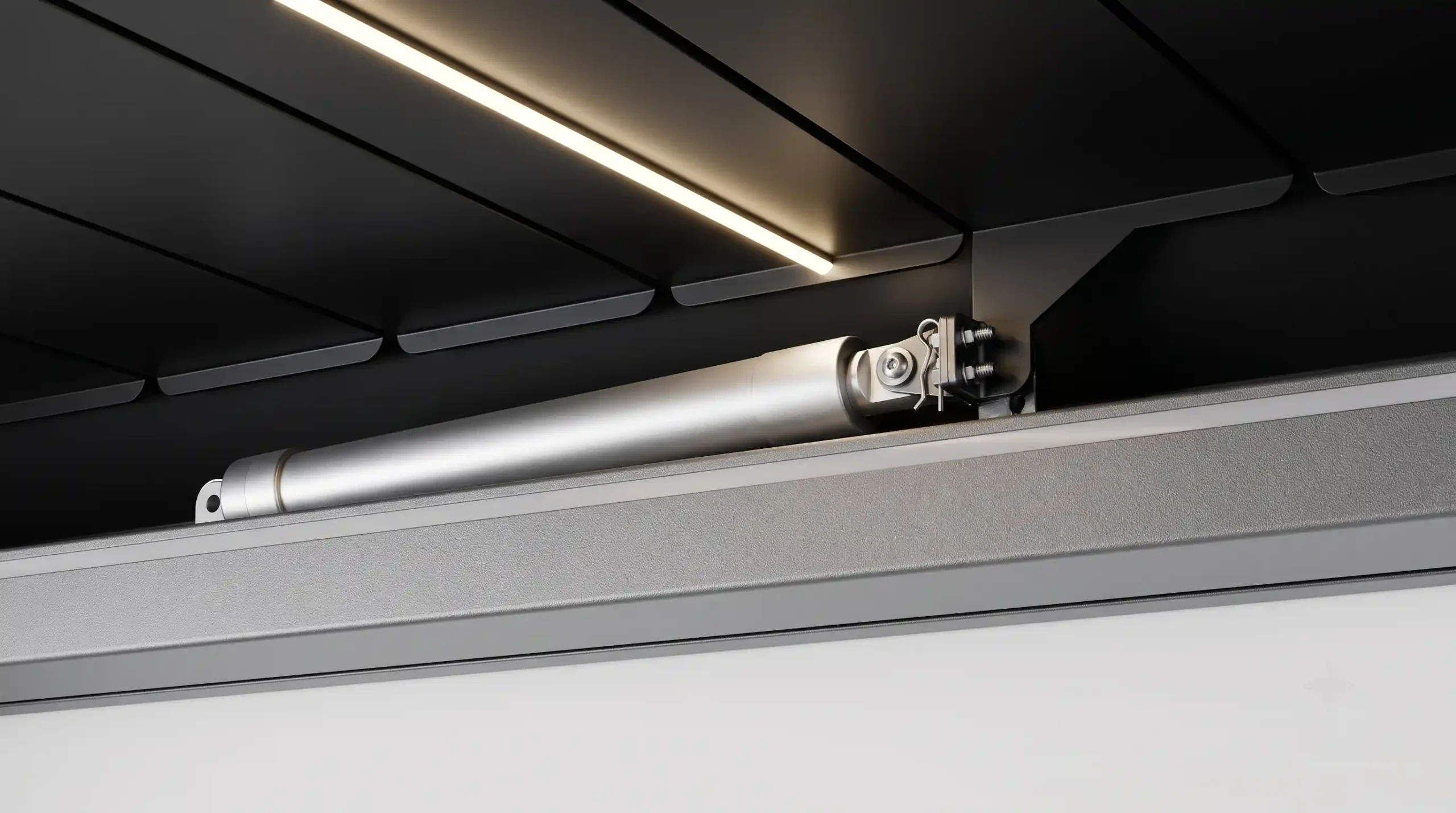
Request a written sequence of operation covering normal use, competing commands, and sensor faults. Knowing that a controller accepts wind and rain inputs does not tell you which action takes priority, how long it persists, or what releases the override.
Consider rain detected during strong wind, a frost condition while someone requests movement, and loss of a wireless sensor. The response must follow the pergola manufacturer’s structural and operating requirements. There is no universal louver position appropriate to every roof design and weather condition.
Ask the supplier to demonstrate those conflicts on the agreed firmware. Record thresholds, delays, lockouts, fault indication, and recovery behavior. Treat current-based obstruction detection as a function requiring validation on your mechanism; do not assume it proves that every potential trapping hazard has been addressed.
Separate loss of connectivity from loss of electrical power. Local RF control may continue without internet access, but a powered controller cannot operate a motor during a mains outage unless the system includes a suitable backup arrangement.
Ask which functions run in the controller and which depend on a gateway, account, or cloud service. Test local roof commands, lighting, and sensor behavior with the router disconnected. For connected features, establish the support period, update policy, account transfer process, and any recurring charges.
Power recovery needs a separate test. Confirm retained settings, position recovery, and whether movement can restart unexpectedly. If the roof requires a manual release or backup supply, agree how it fits the mechanism and how a technician accesses it after installation.
7. Has radio performance been tested inside a representative aluminum frame?
Require an installed radio test with the controller, antenna, power supply, and wiring in their intended positions. Open-space range claims cannot establish dependable operation from a receiver enclosed within your beam profile.
Use several normal operating locations around the pergola, including awkward orientations and the furthest intended control point. Run the lighting and motors during testing, and operate neighboring systems to check pairing and group behavior. Record missed commands and response delays against acceptance limits agreed in advance.
Ask for antenna placement instructions that dealers can reproduce. A result achieved with the cover removed or the antenna temporarily pulled outside the beam needs a production solution. Keep the final antenna arrangement aligned with the product’s applicable radio approval conditions.
8. What does your outdoor protection claim actually cover?
Request the test report and installation conditions for the exact enclosure and connector arrangement. IEC 60529 defines enclosure protection classifications; an IP designation should be traceable to the assembly and conditions that were evaluated.
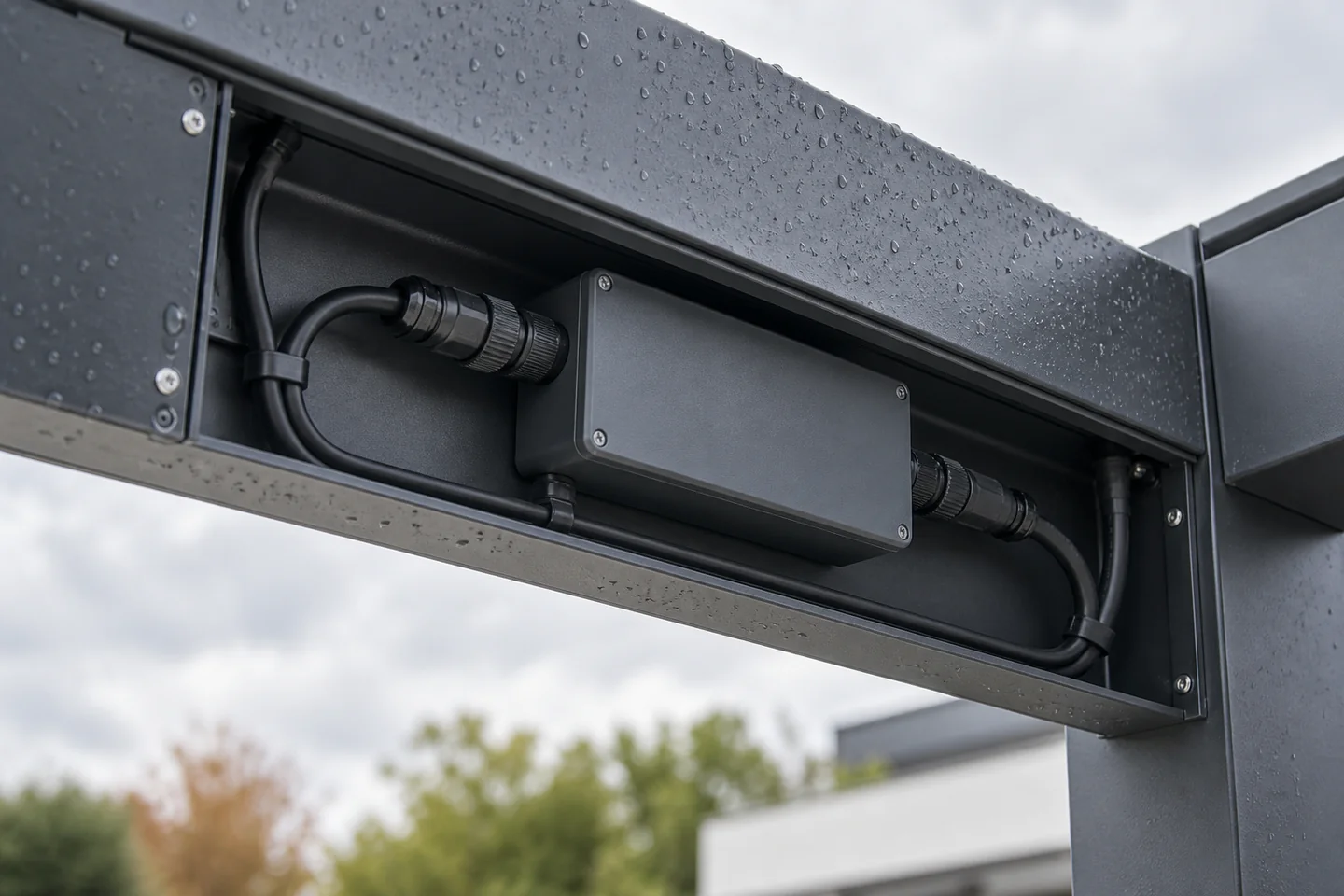
Check cable entries, unused ports, mating connectors, seals, and mounting orientation. Establish whether the controller sits in a sheltered cavity or could face direct water exposure. A well-rated box can still become part of a poor installation if a cable entry or drainage path is wrong.
Discuss heat, condensation, corrosion, and material aging separately. Ask for evidence relevant to your intended climate and load, including operation inside the proposed beam. An enclosure protection rating alone cannot answer how electronics will behave after repeated hot days and cool, damp nights.
9. Which compliance documents apply to the configuration we will sell?
Ask for a document list tied to model numbers, hardware revisions, radio modules, antennas, and power supplies. A folder of certificates from unrelated products is not a usable approval package for your proposed pergola system.
For the EU, the European Commission’s manufacturer guidance assigns responsibility for conformity assessment, technical documentation, and the EU declaration of conformity to the manufacturer. For wireless equipment, discuss the Radio Equipment Directive and the requirements applicable to the actual product.
For the United States, check the relevant authorization and installation conditions under FCC Part 15 rules for intentional radiators. Radio authorization does not settle every electrical safety or installation requirement. Treat Canada and the UK as separate market reviews where they are sales destinations.
Before committing, agree who supplies supporting reports, who assesses the finished configuration, and who handles changes that affect compliance. A revised antenna, power supply, or enclosure should trigger an assessment of whether existing evidence still applies.
10. What must the sample demonstrate before we approve it?
Agree acceptance criteria before the sample arrives. The test should represent the roof, lighting package, cable runs, enclosure, and software that customers will receive. Otherwise, a sample approval can validate a configuration you never intend to ship.
Include normal operation and foreseeable disturbances: maximum permitted simultaneous load, repeated movement within the motor’s duty cycle, low-level dimming, sensor conflicts, power interruption, and loss of connectivity. Have qualified personnel perform fault and protection tests using an agreed safe procedure.
Identify every sample by hardware and firmware revision. Record results, open issues, and the changes needed before another test. Ask whether the unit came from the intended production process, then verify a pilot batch before releasing volume orders. One carefully prepared demonstration unit cannot establish production consistency.
11. Can you show how production units are tested and traced?
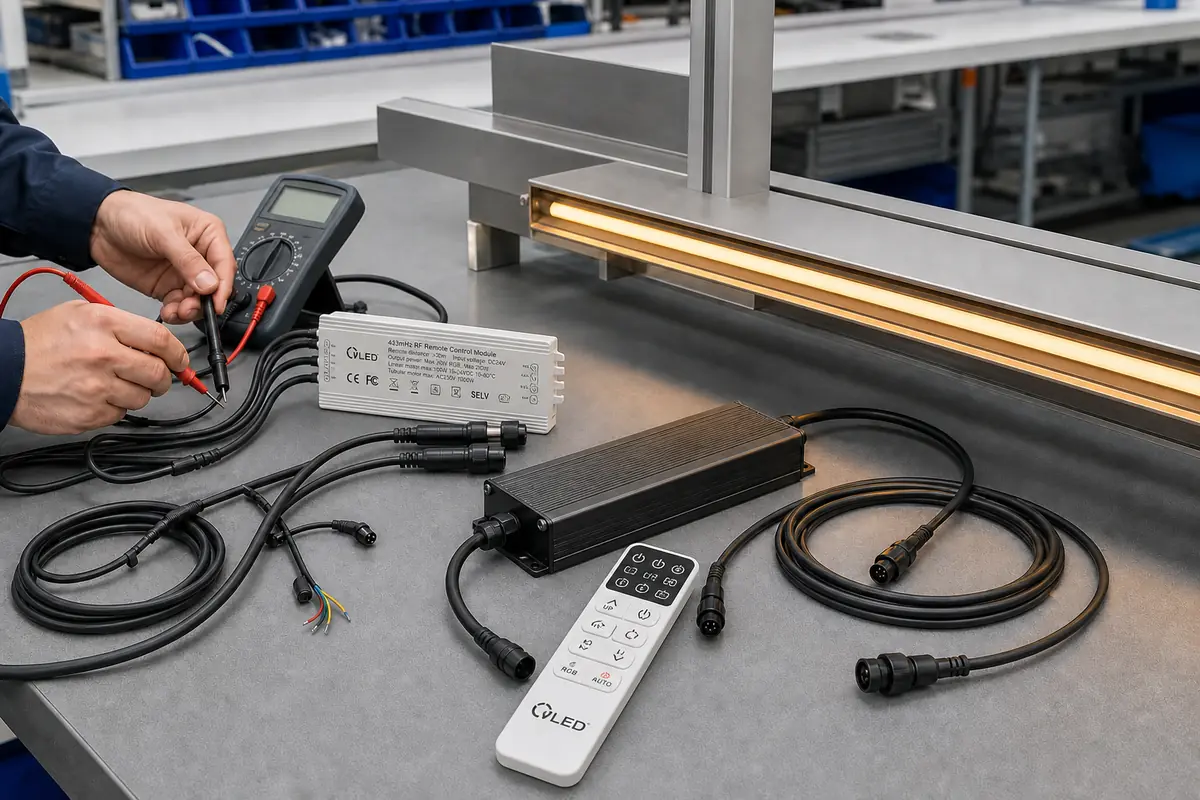
component and firmware versions, test steps, limits, and disposition. “Fully tested” becomes useful only when you know what the test can detect.
Discuss checks for output operation, radio communication, sensor inputs, programming, wiring, and applicable electrical protection. Separate tests performed on every unit from sampling checks and design qualification. A functional check at assembly does not replace environmental validation of the design.
Then follow one failed unit through the supplier’s process. Who contains the affected batch, approves rework, verifies the correction, and checks whether previous shipments need attention? Traceability matters because your service team needs to identify the affected population without replacing every installed controller.
12. How will you control customization and future changes?
Separate configuration changes from development work. A logo, enclosure finish, button layout, new motor interface, and revised sensor priority can have very different costs and validation needs. Ask which requests use an existing design and which require new hardware or firmware.
Specify engineering charges, tooling ownership, documentation access, acceptance milestones, and support obligations. If your commercial plan depends on firmware rights or continued access to a custom design, negotiate those terms explicitly. Paying for development does not automatically define every ownership right.
VLEDSTAR offers OEM control customization and engineering support, including firmware, enclosure, and channel-configuration options. For any such project, the useful procurement question is what will change, who will validate it, and how the approved version will remain identifiable.
Require notification and approval rules for later substitutions. Even a component described as equivalent can affect performance or the relevance of existing test evidence.
13. Can a dealer install, commission, and replace the system from your documentation?
Give a qualified installer the proposed kit and instructions, then observe where clarification is needed. That exercise exposes missing labels, unclear pairing sequences, inaccessible reset controls, and assumptions that the supplier’s own technicians may overlook.
Request wiring diagrams, connection labels, motor direction checks, limit setup instructions, sensor tests, and reset consequences. Manuals should match the supplied revision and the languages needed in your sales markets. Useful terminology must remain consistent between the wiring, remote, app, and troubleshooting guide.
Replacement deserves the same attention as initial installation. Check whether the controller can be removed without dismantling unrelated parts of the pergola, and whether settings can be restored. Our dealer-focused control kit guidance develops these installation and handover details.
14. How will you protect repeat supply and replacement compatibility?
Ask for separate commitments for samples, pilot production, repeat orders, and service parts. A quick sample shipment does not establish that the supplier can meet your seasonal production schedule or support an older product after a redesign.
Discuss minimum orders by configuration, long-lead components, forecast requirements, capacity allocation, and cancellation terms. Establish how the supplier communicates shortages and seeks approval for substitutions. Where a critical part has no qualified alternative, agree a stocking or redesign plan before it becomes urgent.
For installed products, define replacement remote, receiver, sensor, driver, and cable availability. Require a compatibility record linking old and new revisions, plus advance notice of discontinuation. Your service team should know whether a replacement needs pairing, reprogramming, an adapter, or a larger system change.
The choice of ecosystem also affects those options. Our pergola control ecosystem comparison is useful when assessing how a platform fits your product and support strategy.
15. What happens after a failure, and what will support cost us?
Request the service procedure and warranty terms before placing the order. Establish the response route, information needed for diagnosis, return authorization process, repair or replacement decision, and treatment of confirmed manufacturing defects.
Separate component replacement from freight, dealer labor, site access, and diagnostic time. A warranty may cover the controller while leaving the manufacturer responsible for substantial field costs. Agree those boundaries and identify who handles recurring faults, root-cause analysis, and corrective action.
Compare suppliers on the cost of a usable, supported installation. Include the quoted kit, engineering and tooling allocation, inbound freight, installation effort, service stock, and any software charges. Use your own service history to model field costs; where evidence is missing, compare scenarios rather than invent a failure rate.
A lower purchase price may still be the right choice. It becomes a defensible decision when the trade-offs are visible and your team has accepted them.
Turn the answers into a supplier decision
Send the same specification and questions to every shortlisted pergola control system supplier. For each answer, record the evidence, unresolved issue, responsible person, and date for resolution. This keeps a polished sales presentation from carrying more weight than a verified result.
A practical internal scale is: 0 for no answer, 1 for a stated capability, 2 for relevant documentation, and 3 for demonstrated performance in your configuration. This is a suggested purchasing method, not an industry standard. Use contractual evidence for commercial commitments rather than trying to test them on a bench.
Apply mandatory conditions before comparing totals. Unresolved motor compatibility, unacceptable fault behavior, missing market documentation, or an unworkable replacement process should hold back production approval. Strong performance elsewhere cannot compensate for a requirement your product must meet.
Then use a pilot order to check repeatability. Confirm the delivered components, programming, labels, documentation, and installation process against the approved sample. The supplier earns volume business when the evidence survives that transition.
Bring your actual pergola specification to the first discussion
VLEDSTAR began in LED lighting in 2010 and develops lighting and integrated control solutions for outdoor structures. Our range covers spotlights, LED strips, wall and post lights, connection accessories, and control options for lighting, motors, and sensors. That scope allows manufacturers to discuss the electrical package as a connected system.
For a useful evaluation, prepare your target markets, motor datasheets, beam cavity dimensions, lighting loads, cable lengths, sensor requirements, preferred interfaces, and expected order volumes. Include the service constraints your dealers already face.
Discuss your OEM control requirements with VLEDSTAR and request a proposed configuration for sample evaluation. Agree what it must demonstrate before you approve production, so your purchasing decision rests on the pergola your customers will actually use.

Pingback: Pergola Lighting Controls for Outdoor Kitchens and Dining Areas