


The Control Gap No One Is Talking About
Walk the outdoor furniture halls at the Canton Fair in March 2026 and the story of the pergola industry becomes immediately legible. The structural craftsmanship on display is genuinely sophisticated — powder-coated aluminum extrusions with precision tolerances, bioclimatic louvres engineered to track solar angles, polycarbonate panels in every conceivable finish. Manufacturers have invested heavily in what the product looks like and how it holds up.
Yet when you turn your attention to how these structures are controlled, a stubborn fragmentation persists. Across booth after booth, the same shortfalls repeat:
- Motorized louvres paired with a separate, basic LED strip controller — two remotes, two user experiences, zero integration.
- Electric motors that open and close the canopy, but lighting locked to a single static setting with no dimming.
- Smart lighting with app control, but louvre adjustment still requiring a hand-crank or a separate RF fob.
- No manufacturer on the floor capable of controlling multiple pergola bays simultaneously — a basic requirement for any hotel terrace, restaurant garden, or commercial installation.
This isn’t a niche complaint. End users who have lived with voice-controlled lighting, automated blinds, and app-driven climate systems indoors now arrive at pergola showrooms with unified smart-home intelligence as an assumed baseline. A louvred pergola priced at €10,000–€40,000 that ships with two separate remotes and no weather automation isn’t just inconvenient — it feels like an anachronism. The manufacturers who bridge this gap first will claim compounding advantages: higher justified price points, lower warranty callbacks from wiring faults, and access to the commercial hospitality channel where integrated control capability is often a decisive specification criterion.
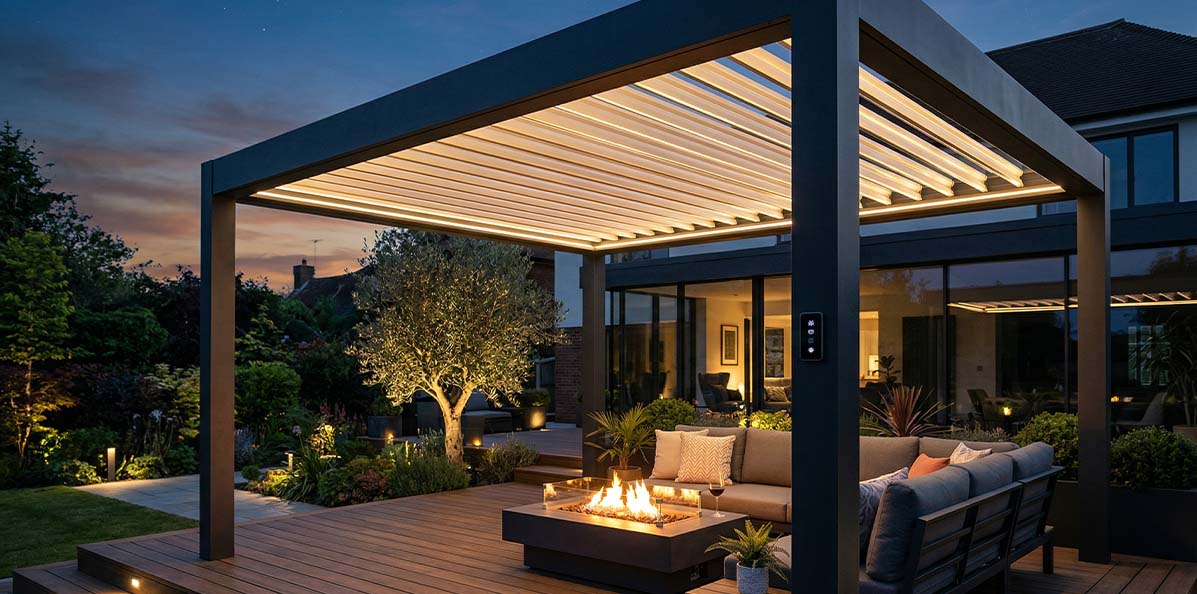
Premium bioclimatic pergolas now define outdoor living in the luxury residential and hospitality segments — yet most still ship with fragmented, non-integrated control systems.
“The structural engineering at the show was exceptional. The control layer was almost universally an afterthought. That gap is exactly the opportunity we’ve spent two years closing.”
— PergoPro Development Team, Canton Fair 2026
Why True Integration Is an Engineering Problem, Not a Software One
Adding a Wi-Fi module to an existing lighting controller is easy. Genuine hardware integration — a single PCB that simultaneously manages a DC louver motor drive, full-spectrum RGB lighting, white-channel PWM, rain sensor input, and multi-unit RF communication — is a categorically different engineering challenge. Understanding why helps clarify what separates PergoPro from the bolt-together integrations that dominate the current market.
1. Signal Architecture and Isolation
Louver motors run on either AC or DC drive signals with position feedback and current sensing. RGB LED drivers operate on separate PWM channels at different voltage rails. Putting both on the same board requires deliberate signal isolation: motor switching transients generate noise that can corrupt PWM color data, causing visible color drift or LED flicker under load. Solving this cleanly requires careful PCB layout, optoisolation where appropriate, and firmware that coordinates motor and lighting operations without conflict at the timing level.
2. Miniaturization Within Profile Cavities
Pergola aluminum extrusion profiles contain narrow internal cavities — originally engineered for cable routing, not electronics housing. A genuinely integrated control system must fit inside these cavities without profile modification, preserving the clean exterior geometry that justifies premium pricing. This means the full-function board must occupy a cross-section small enough for standard cavity dimensions, with adequate thermal management to handle heat dissipation inside a sealed metal channel under peak summer conditions.
2. Outdoor Environmental Durability
The outdoor environment is not simply a tougher version of indoors. UV radiation degrades polymer housings. Moisture cycling creates electrochemical corrosion at exposed metal contacts. Temperature swings from −20°C to +60°C inside an aluminum profile impose repeated thermal expansion stress on solder joints and component bonds.
4. Multi-Brand Motor Compatibility
The installed base of pergola motors runs predominantly on Somfy and Dooya platforms, with a significant long tail of regional and white-label brands. A control system that requires motor replacement creates an immediate cost and disruption barrier for both new installations and upgrade projects.
The Market Opportunity for Integrated Pergola Systems
The outdoor living market has matured from a seasonal add-on category into a year-round, high-value extension of the home — and of commercial premises. Three structural forces are converging to make integrated control a competitive necessity rather than an optional feature.
Rising Baseline Expectations
Consumers who have invested in smart indoor lighting, motorized blinds, and app-controlled HVAC no longer view automation as premium. In the residential segment where bioclimatic pergolas are concentrated — households investing €10,000–€40,000 in an outdoor structure — coherent automation is expected. Manufacturers who cannot credibly demonstrate integrated intelligent control are increasingly filtered out at the showroom and specification stages. According to Statista’s smart home market data, smart outdoor products represent one of the fastest-growing sub-segments, fueled directly by this consumer expectations shift.
Commercial and Hospitality Demand
Post-pandemic outdoor dining has become permanent in the hospitality industry’s operational model. Hotels, restaurants, and rooftop venues are investing in permanent structures — and their procurement teams specify control capability as a primary requirement. A restaurant manager operating a 400 m² covered terrace cannot work with six individual remote controls. They require synchronized group control, programmed scene transitions, and reliable automated weather response. This commercial channel typically offers 3–5× the per-unit value of residential sales, with project specifications driven by system-level capability rather than material aesthetics alone.
Retrofit and Upgrade Scale
Tens of millions of motorized pergolas and canopies installed across Europe and North America between 2015 and 2022 are now reaching a natural upgrade cycle. Owners want smarter control — but a system requiring motor replacement faces poor economics and installation disruption. A retrofit-compatible solution that works with installed motors at a fraction of the total replacement cost represents a large, underserved market segment that manufacturers with backward-compatible systems can access exclusively.
PergoPro: Two Years of Engineering, One Point of Control
The genesis of PergoPro was a single question we could not find a satisfactory answer to anywhere in the market: why does controlling a pergola still require two separate remotes?
After two years of circuit design, waterproofing validation, field testing across climatic zones, firmware iteration, and motor compatibility qualification, we have our answer: it doesn’t have to. PergoPro is a fully integrated pergola control system that places motor drive, RGB lighting, monochromatic lighting, rain sensor input, and RF group management on a single unified board — operated from a single remote.
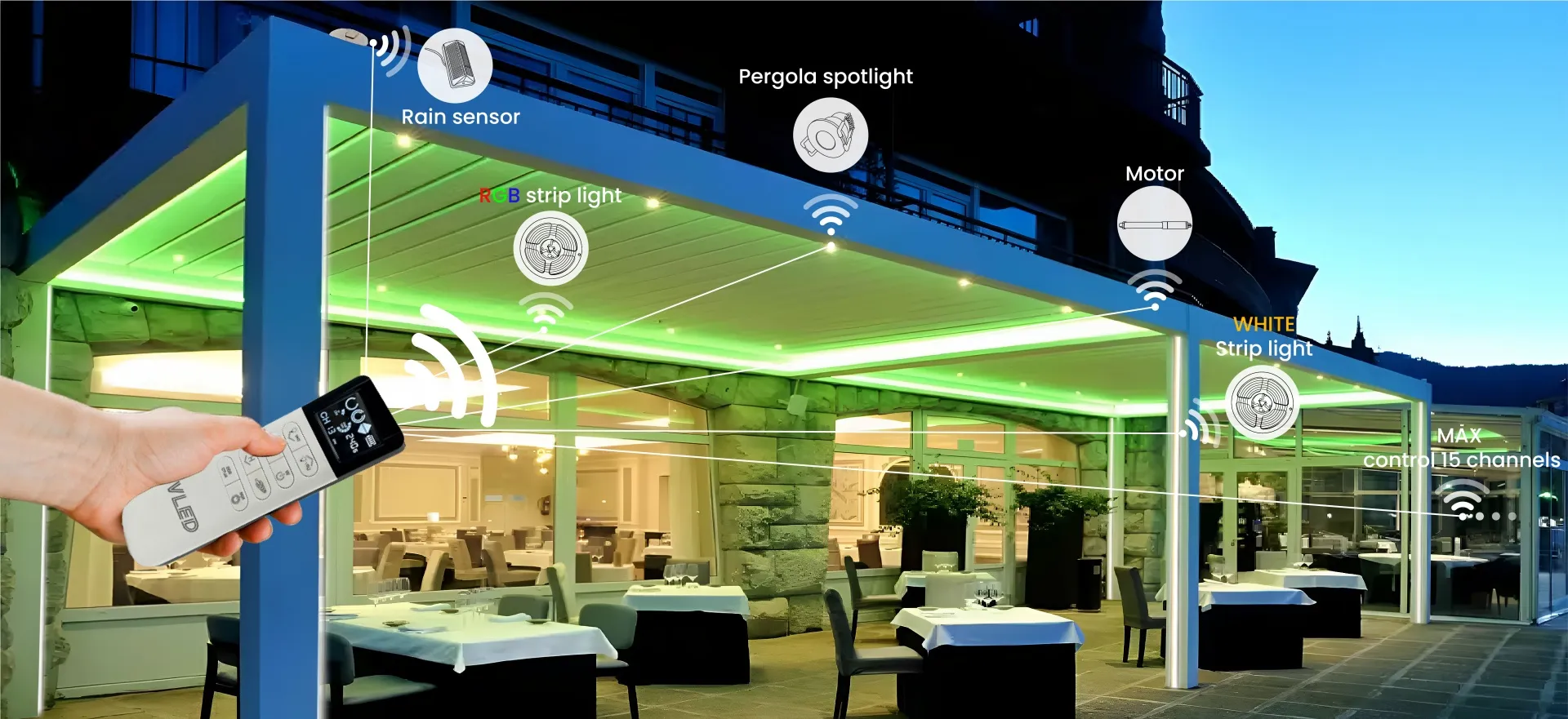
PergoPro delivers coherent single-point control that transforms a collection of outdoor hardware components into a unified intelligent structure.
Core System Capabilities
Complete color spectrum control with smooth PWM dimming and scene presets. No separate driver box — all from the primary remote.
Warm white, neutral, and cool white channels with independent dimming. Tunable white configurations fully supported.
DC and AC motor output with configurable position limits. Verified compatibility with Somfy, Dooya, and all major market brands.
Integrated input port triggers automatic louvre closure on precipitation. No separate controller module required.
One remote synchronizes up to 15 PergoPro boards simultaneously — built for commercial terraces and multi-bay estates.
IP65-rated sealed push-fit connectors throughout. Single-orientation mating eliminates wiring errors. Fast installation for any skill level.
OEM Integration Note for Manufacturers
PergoPro Is a Platform, Not a Consumer Product
PergoPro is designed for integration into your production line. We provide pre-production compatibility review for your specific extrusion profiles, motor specifications, and connector geometry. Custom firmware parameters and connector configurations are available for volume OEM partners. Contact our technical team before your first production run to initiate the qualification process.
Designed to Disappear: Integration Without Aesthetic Compromise
A bioclimatic pergola at the €15,000–€40,000 price point is a design statement as much as a functional structure. Buyers in this segment are acutely sensitive to any element that visually degrades the product — exposed junction boxes, surface-run conduit, protruding sensor housings, external driver enclosures. The control hardware must earn its place not just by functioning correctly, but by being genuinely invisible during normal use.
This constraint drove some of the most demanding work in PergoPro’s development. Board geometry was iterated to achieve the dimensional footprint required to fit cleanly inside the internal cavity of a standard pergola extrusion profile — no profile modification, no surface mounting, no visible housing. The result: PergoPro is compatible with 99% of commercially available pergola extrusion profiles.
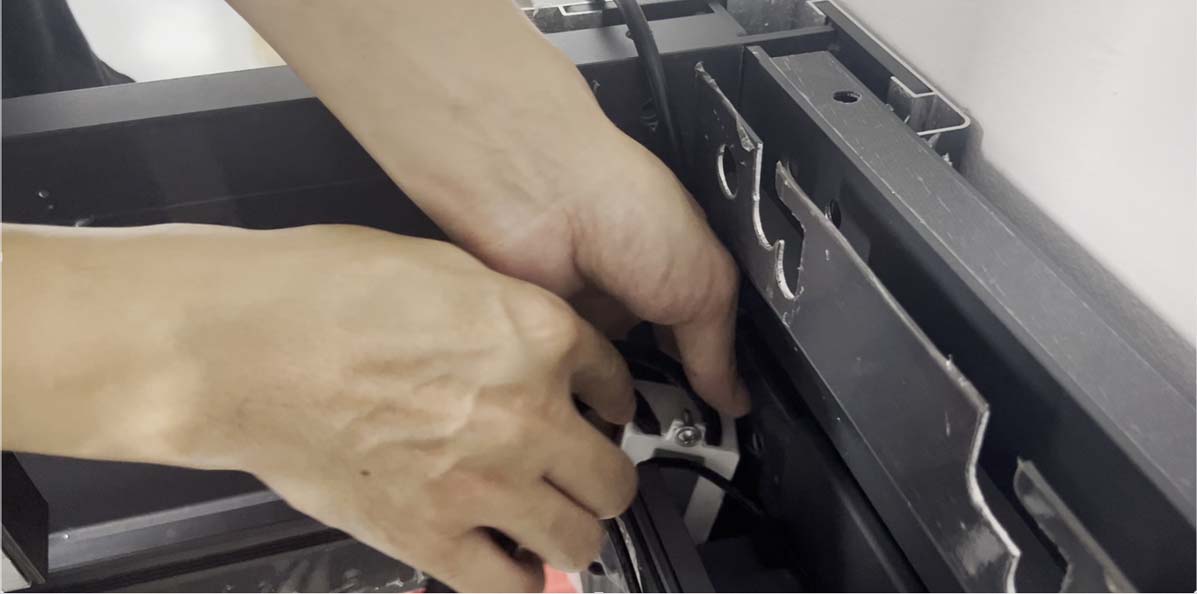
Premium pergola aesthetics demand invisible integration. Profile-embedded control hardware preserves the clean lines that justify the price point.
Plug-and-Play Waterproof Wiring
Conventional outdoor electrical installations use screw-terminal wiring blocks — slow to install, error-prone, and corrosion-vulnerable at exposed terminals. PergoPro replaces every field connection with sealed push-fit waterproof connectors. Each connector mates in a single fixed orientation, making incorrect connections mechanically impossible. All connectors are IP65-rated at the point of connection — not dependent on additional conduit or housing.
Field reports from early installer partners show typical wiring time reduced by more than 60% compared to conventional control system installation, with zero wiring-fault warranty callbacks in installations using the push-fit system.
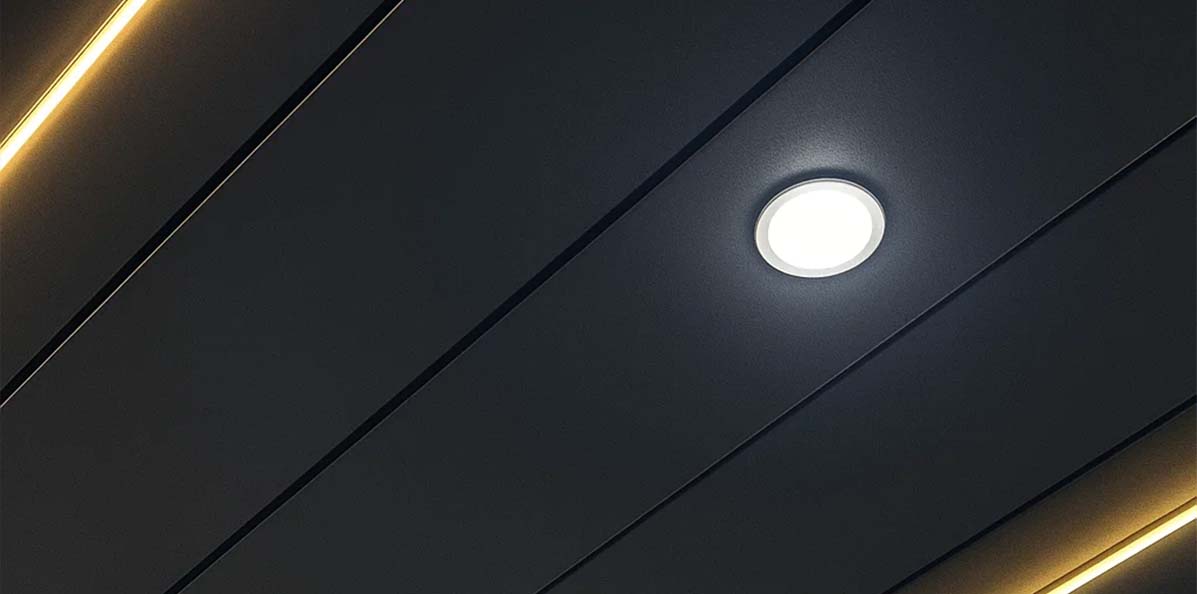
The full range of pergola lighting components follows the same hidden-first principle: flush-mount LED spot housings with snap-fit installation in compatible extrusion channels, recessed driver sections, and cable management built into the connector geometry.
IP65 as Baseline Standard: What Outdoor Really Demands
Control electronics that perform flawlessly in interior environments will fail in outdoor installation within months if not designed from first principles for exposure. We’ve studied the failure modes systematically:
- Moisture ingress at connector points causes intermittent faults — the most diagnostically difficult and warranty-expensive failure mode, because the fault often resolves temporarily when conditions change.
- UV degradation of polymer housings causes surface cracking within 12–18 months in high-UV climates, progressively compromising the IP rating and exposing internals to weather.
- Thermal cycling fatigue — solder joint stress from repeated day/night expansion and contraction cycles — manifests as intermittent connection failures after 12–36 months in the field.
- Terminal oxidation in coastal or high-humidity environments creates resistance that presents as flickering lights or erratic motor behavior — often misdiagnosed as software or motor faults.
Our response: IP65 per ISO/IEC 60529 is the unconditional baseline for every PergoPro component. There is no lower-protection standard SKU and no weatherproof upgrade tier. Every board, every connector, every spotlight housing ships IP65-rated.
UV Resistance Validation
We subject all PergoPro spotlight housings to a continuous six-month UV lamp accelerated weathering test before release — simulating multiple years of exposure in high-UV Mediterranean and equatorial conditions. Post-test inspection confirms zero chalking, zero surface cracking, no color shift, and full structural integrity. For manufacturers offering three-year or longer warranties, this validation directly supports warranty reserve calculations.
PergoPro vs. Market Alternatives — Full Capability Comparison
| Capability | Separate LED + Motor | Mid-Market Integrated | PergoPro |
|---|---|---|---|
| Single remote for motor + lighting | ✗ No | ~ Partial | ✓ Full |
| RGB + Monochromatic on same board | ✗ No | ✗ No | ✓ Yes |
| Somfy / Dooya motor compatibility | ✗ No | ~ Limited | ✓ All major brands |
| 15-unit group control | ✗ No | ✗ No | ✓ Up to 15 units |
| Rain sensor auto-close | ✗ No | ~ Add-on | ✓ Integrated port |
| Fits inside profile cavity | ✗ No | ~ Rarely | ✓ Designed for it |
| Plug-and-play sealed connectors | ✗ No | ✗ No | ✓ Throughout |
| IP65 — all components, standard | ✗ No | ~ Partial | ✓ Full system |
| 6-month UV weathering test | ✗ No | ✗ Rarely | ✓ Standard |
Motor Compatibility: Eliminating the Rip-and-Replace Barrier
Motor lock-in is the single largest barrier to control system upgrades across the installed pergola base. If adopting a new control platform requires replacing functioning motors, the project economics become immediately unfavorable — and the installation disruption (structural access, motor removal, rewiring, recommissioning) is substantial enough to deter many customers who would otherwise upgrade.
We treated broad motor compatibility as a non-negotiable design requirement from the start. PergoPro’s output stage supports the signal protocols and drive characteristics used by all major market motor types, with specific verified compatibility including:
- Somfy — the dominant specification brand in European residential and commercial pergola projects, covering both AC and DC motor lines
- Dooya — widely specified across Asia-Pacific new-build and in European value-tier pergola ranges
- All market-standard DC and AC tubular and linear motor types operating on standard signal protocols
For retrofit upgrades, a customer with existing Somfy or Dooya motors upgrades to PergoPro’s integrated smart control without touching a single motor. For new builds, manufacturers retain complete motor sourcing flexibility — no forced pairing between PergoPro and a specific motor supplier.
Retrofit Economics — A Worked Scenario
The Numbers That Win the Specification
Motor-proprietary system: full motor replacement across 12 bays plus structural access, rewiring, and recommissioning — estimated total cost €8,000–€15,000. PergoPro upgrade: control board and lighting hardware only, motors unchanged — estimated total cost €1,800–€3,500. The economics remove the competing system from consideration before the first spec sheet is compared.
The 15-Unit Advantage: Serving Commercial and Large-Area Installations
Residential pergola installations are predominantly single-bay or double-bay. But the fastest-growing segment in outdoor structures is commercial and semi-commercial — restaurant terraces, hotel pool decks, resort pavilion systems, and premium residential properties with formal garden structures. These installations share one defining operational requirement: synchronized area control at the zone level.
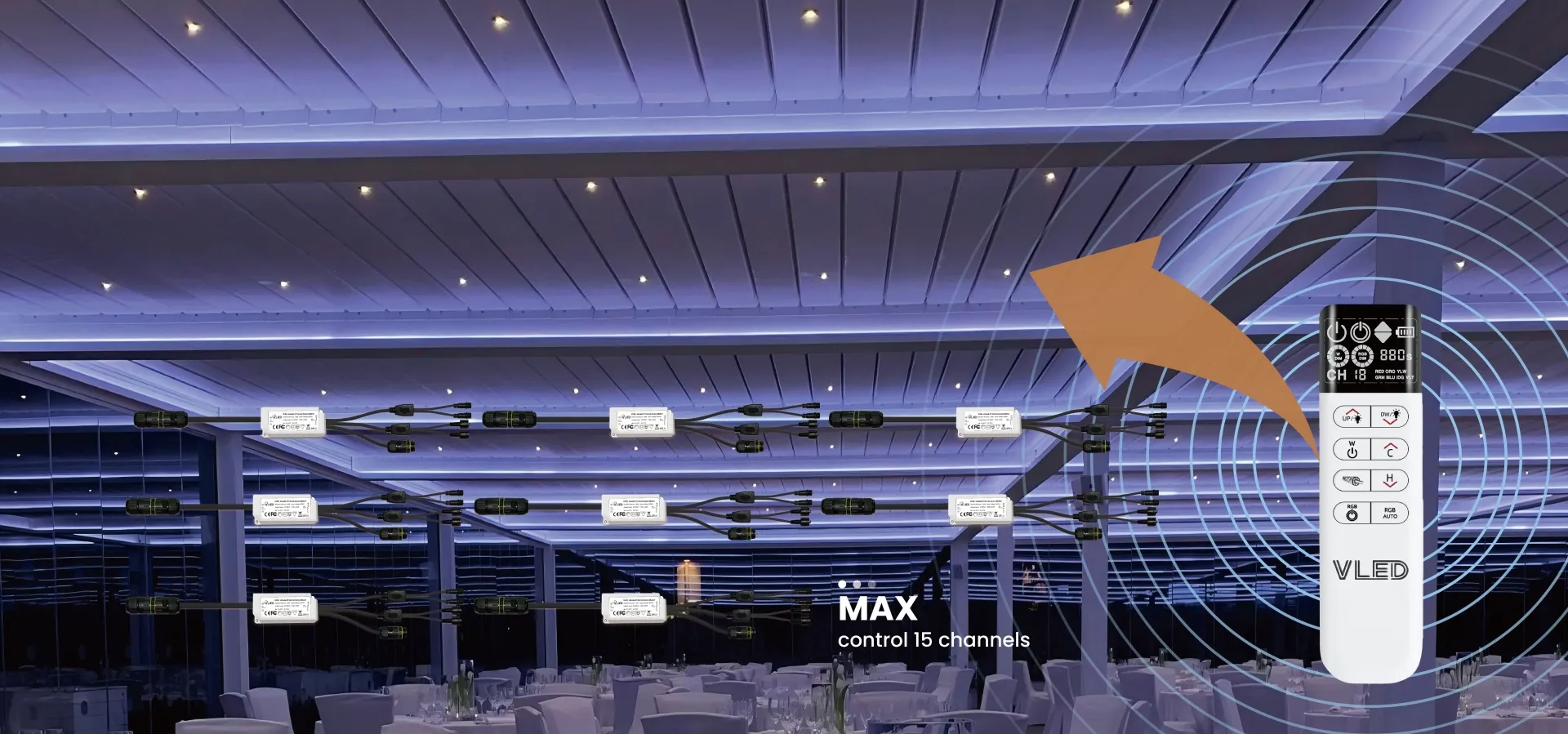
Commercial outdoor terraces covering 200–600 m² are now a primary growth segment for bioclimatic pergola manufacturers. PergoPro’s 15-unit group control was engineered for this environment.
PergoPro’s RF architecture allows one remote to synchronize up to 15 individual control boards in perfect coordination. The practical implications are significant:
- A restaurant manager opens all bay louvres and activates the evening dining lighting scene across a 400 m² terrace in a single button press — three seconds rather than five minutes of individual adjustments.
- A hotel pool deck transitions from full-open daytime ventilation to closed wind-protection evening mode in one command.
- A rain sensor triggers automatic louvre closure across all 15 bays simultaneously, regardless of whether any staff member is monitoring conditions.
For manufacturers selling into commercial channels, group control capability is frequently the deciding factor at the specification shortlisting stage. Procurement managers for hotel and F&B groups are not evaluating products bay-by-bay — they are specifying at the area-management level. Products that cannot clearly answer “how do you control the whole terrace” are typically eliminated early in the process.
Full Technical Specifications
| Ingress Protection | IP65 — all components per ISO/IEC 60529 |
| Operating Temperature | −20°C to +60°C continuous |
| UV Resistance Validation | 6-month continuous UV lamp test — zero surface degradation confirmed |
| Lighting Types Supported | RGB full-spectrum color + Monochromatic white (single board) |
| Dimming Method | PWM — smooth and flicker-free across full 0–100% range |
| Motor Drive Output | DC and AC motor types; configurable position limits |
| Motor Brand Compatibility | Somfy, Dooya, all standard-protocol market brands |
| RF Group Control | Up to 15 units synchronized per remote |
| Rain Sensor Integration | Integrated input port — automatic louvre-close on trigger signal |
| Wiring System | IP65-rated sealed push-fit waterproof connectors throughout |
| Board Form Factor | Fits standard pergola extrusion profile internal cavities |
| Profile Compatibility | Compatible with 99% of commercially available market profiles |
| OEM Customization | Connector geometry, firmware parameters, volume OEM pricing |
The Strategic Value for Pergola Manufacturers
Integrating PergoPro into your product range is a structural business decision, not a feature addition. It affects positioning against competitors, pricing authority, the installer experience with your product, and the narrative customers carry into their social networks and review platforms.
A pergola that ships with two remotes and no weather automation signals that it is a commodity structural product. Integrated intelligence that operates invisibly supports the narrative that the product is a premium outdoor room, allowing manufacturers to defend price points against lower-cost structural competition without needing to win on material specifications alone.
A single integrated control system replaces three to four separate SKUs: motor controller, LED driver, RF receiver, rain sensor input module. Fewer supplier qualification processes, fewer component inventory positions, fewer part numbers on the production floor — and a single technical point of contact for integration support and firmware updates.
Wiring errors are the dominant source of early-life field failures in outdoor control electronics. Connectors that can only mate in one orientation, with sealed IP65 protection pre-integrated at the connection point, eliminate the entire fault category. Fewer installation errors mean fewer after-sales visits, lower warranty cost accruals, and stronger installer relationships.
Commercial hospitality projects increasingly require documented, tested group control capability as a pre-qualification criterion. PergoPro’s 15-unit synchronized control opens access to specification processes that were previously closed to manufacturers without this capability, adding a higher-value channel alongside core residential business.
Explore the complete pergola control system range and our full lineup of integrated pergola lighting solutions — both designed for seamless OEM integration into production pergola ranges.
Frequently Asked Questions
OEM & Manufacturer Enquiries
Ready to Integrate Intelligent Control Into Your Pergola Line?
Talk to our technical team about profile compatibility, motor specifications, connector customization, and OEM pricing for your production range.

Pingback: Outdoor Kitchen Pergola Control Packages: Lighting, Louvers, Fans, and Sensors
Pingback: Outdoor Kitchen Pergola Control Packages for OEMs
Pingback: Retractable Louvered Pergola Control Systems: Motor, Remote, and Sensor Requirements
Pingback: What Is a Smart Pergola Control System? A Manufacturer’s Explanation
Pingback: What Is a Smart Pergola Control System? OEM Guide
Pingback: Manual Override and Fail-Safe Design for Motorized Pergola Controls